YR74 TFV Network Rail Ford Transit
| REGISTRATION YR74 TFV |
The side access is shown open, revealing the mobile command workspace and communications equipment.

Network Rail operate a range of vehicles to respond to emergencies on the railways. They work closely with the transport police, local police, fire & rescue and ambulance services.
| REGISTRATION YR74 TFV |
The side access is shown open, revealing the mobile command workspace and communications equipment.

| REGISTRATIONS KS66 XZWKS66 YAF |
The photograph shows a pair of vehicles with roller-shutter bodywork.

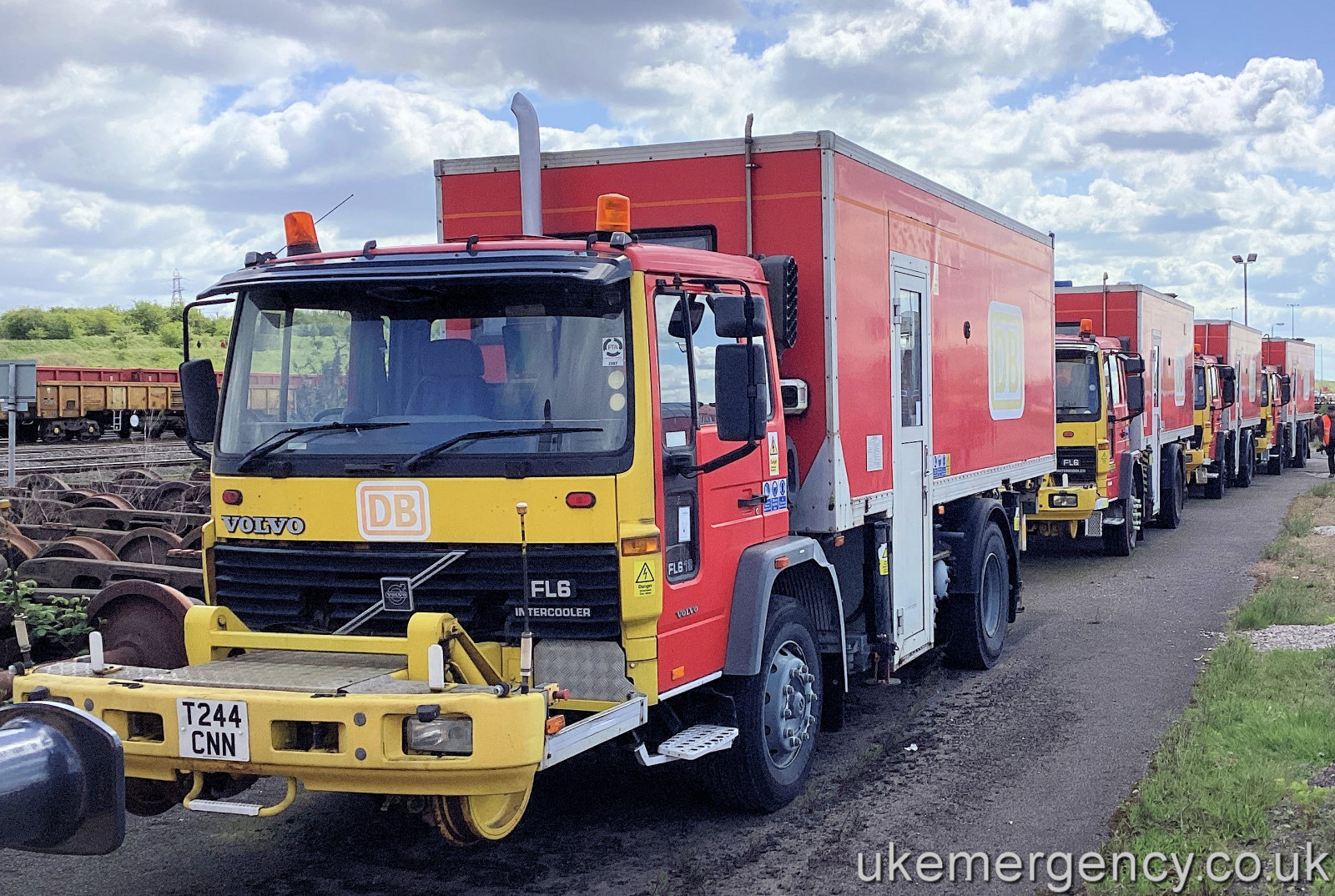
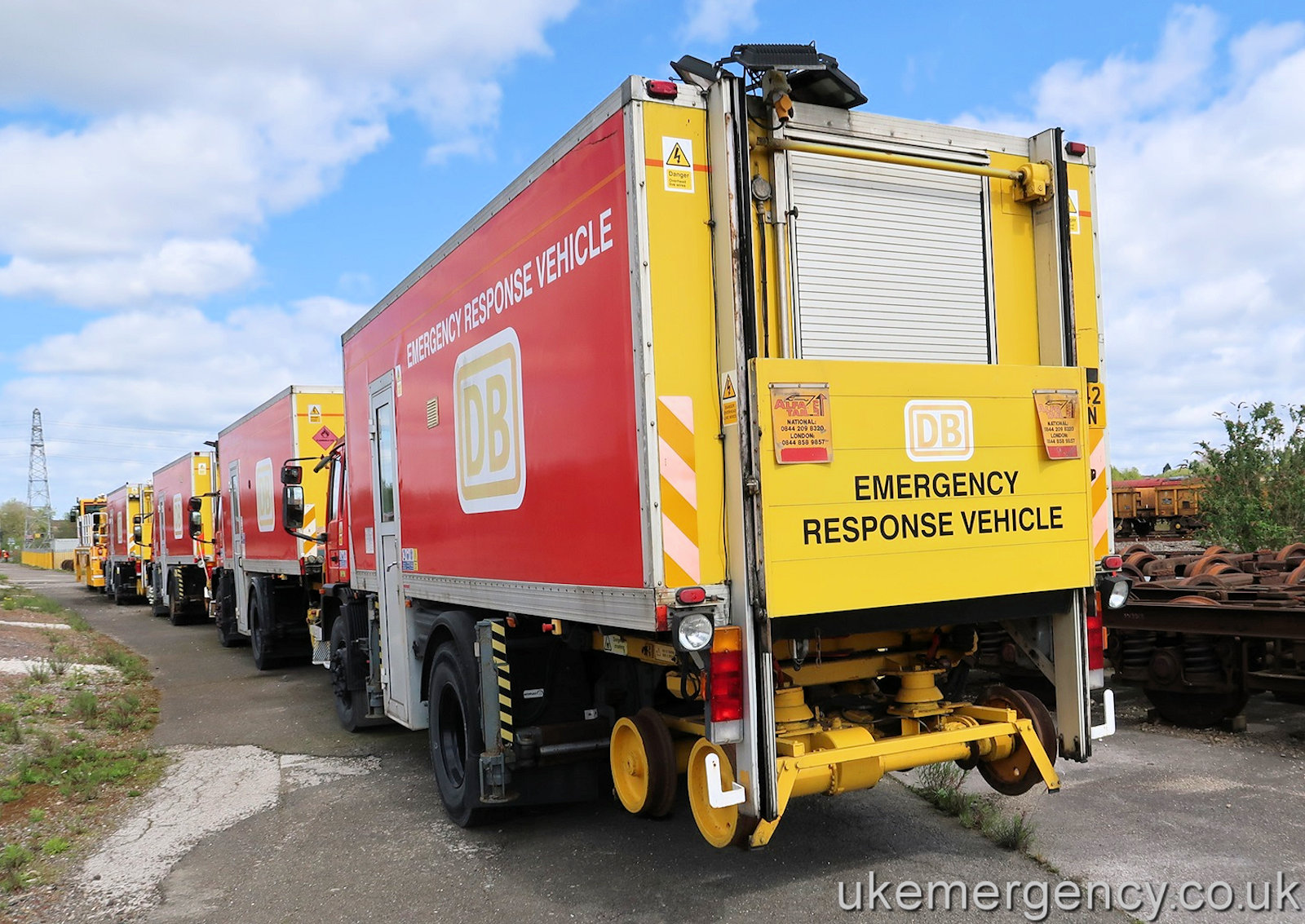
| REGISTRATIONS T241 CNNT242 CNNT243 CNNT244 CNN |
All four vehicles are sequential T-registrations (1999). They were operated by the freight company English Welsh & Scottish Railway (now DB Cargo). These vehicles were Road Rail Emergency Vehicles, transporting breakdown and recovery equipment to rail incidents. They were based around the country but have been brought all together at Toton depot in Nottinghamshire in this photograph. They have now been decommissioned from service. The replacement vehicle type is a little less spectacular, a plain white Ford Transit, but allows more flexible access into station car parks and urban areas whilst the same equipment carried.

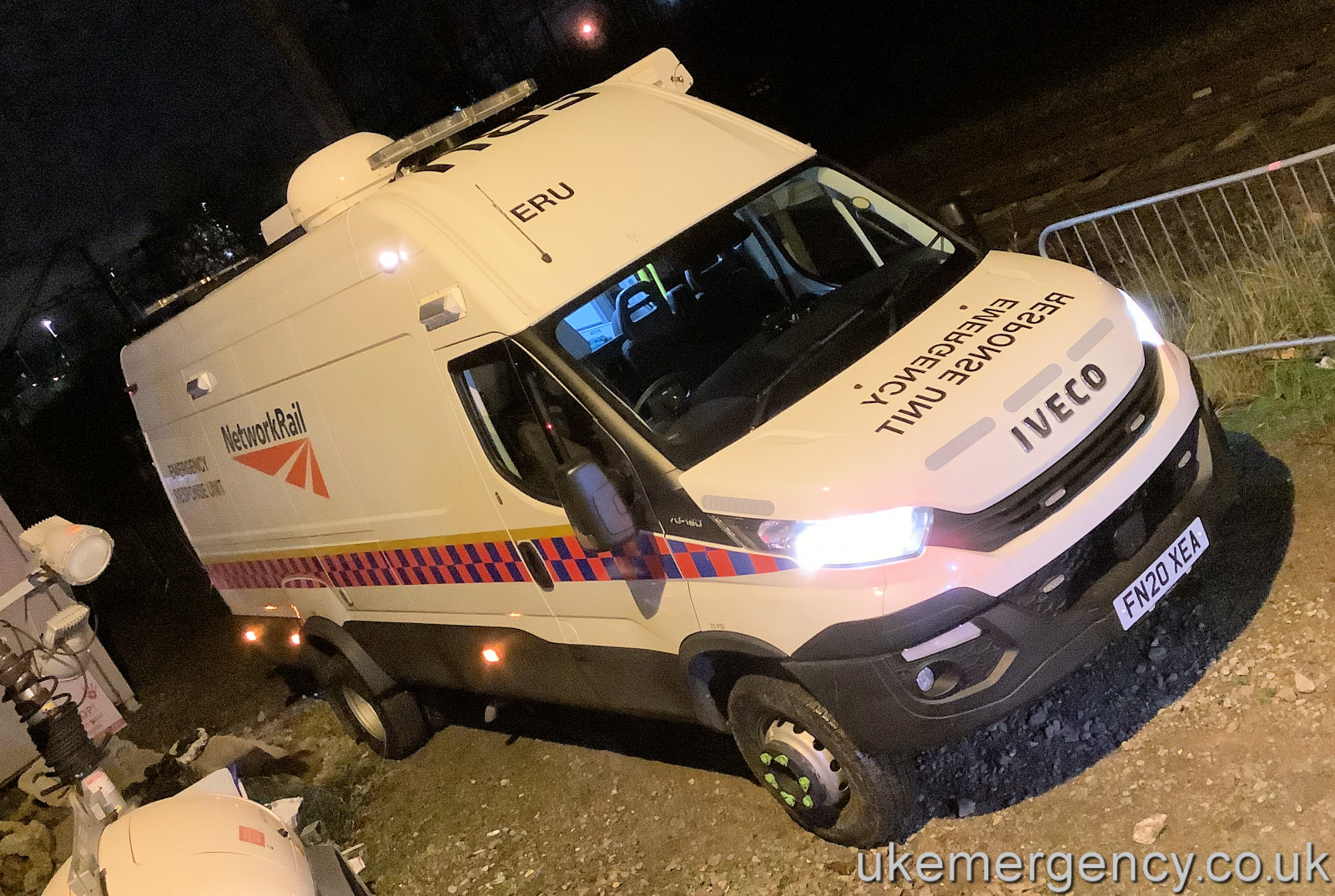
| REGISTRATION FN20 XEA |
Emergency response unit. It has an office-based control desk and rear tail lift with load space for carrying various equipment. It also boasts an inflatable shelter, train evacuation ramps, overhead line emergency equipment, portable lighting, fatality screen, rail stretcher and bulk PPE. It is fitted with amber flashing lights but also fitted with blues and twos however these can only be used with specialist trained driver.
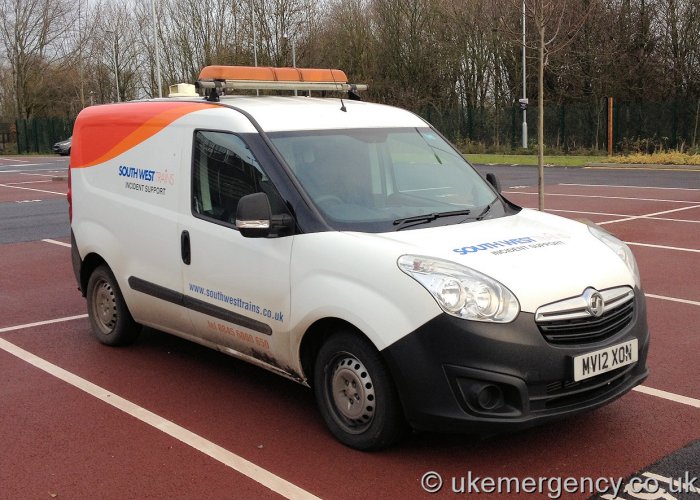
| REGISTRATION MV12 XON |
Incident Support Unit. This small incident vehicle is to attend railway related incidents and deliver operational staff to incident sites. It is seen here at Basingstoke Rail Operations Centre.

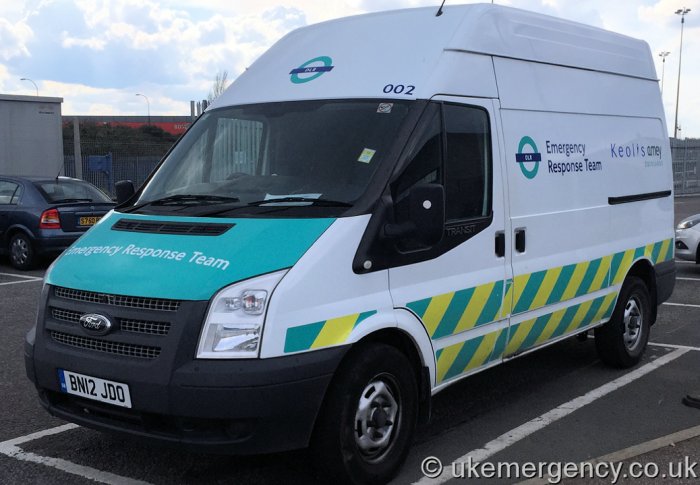
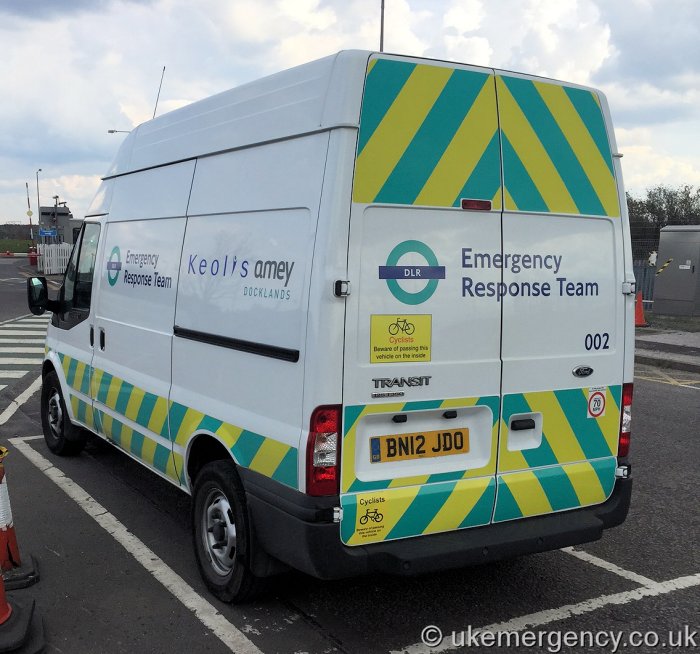
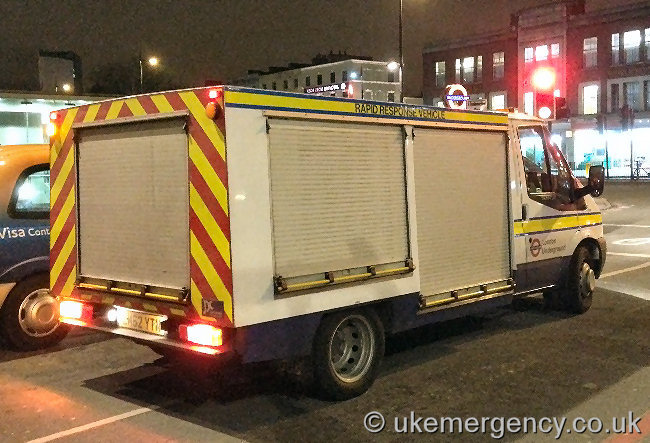
| REGISTRATION BN12 JDO |
DLR Ford Transit Emergency Response Team van, run on behalf of TfL by a private company Keolis Amey. This ERT has equipment to deal with DLR train breakdowns, trackside emergencies, one unders, collisions, fires, signal or computer malfunctions (as DLR is driverless automated). It carries tools and rescue equipment, first aid resuscitation equipment, and work alongside BTP and London fire brigade in the event of an incident. It has no light bar or any warning beacons at all and so may need a BTP escort when attending incidents to enable it to reach the location promptly. Note the interesting colour scheme of the rear chevrons. As opposed to the standard red/yellow, they have opted for turquoise and yellow, inkeeping with the DLR branding colours.
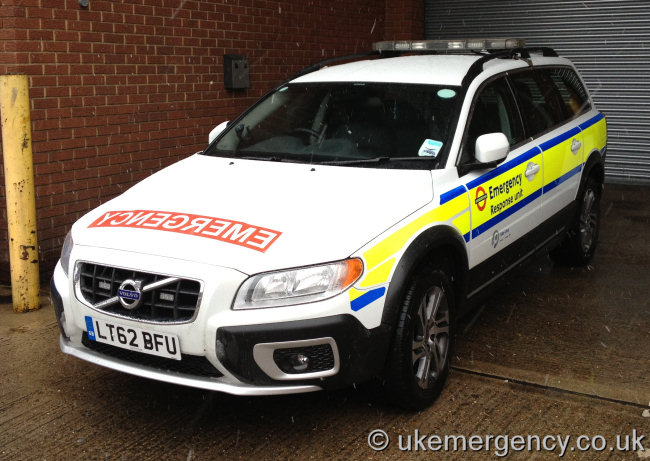
| REGISTRATION LT62 BFU |
A Volvo XC70 SE D4 Auto that is used as a London Underground Emergency Response Unit (ERU). The vehicle is used by the duty manager to respond to urgent requests for work and is based at Camden, North London
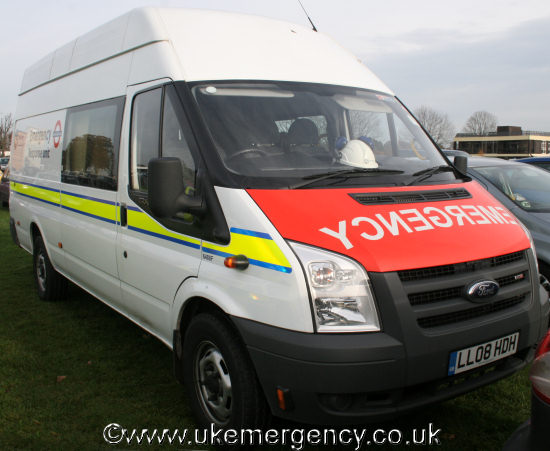
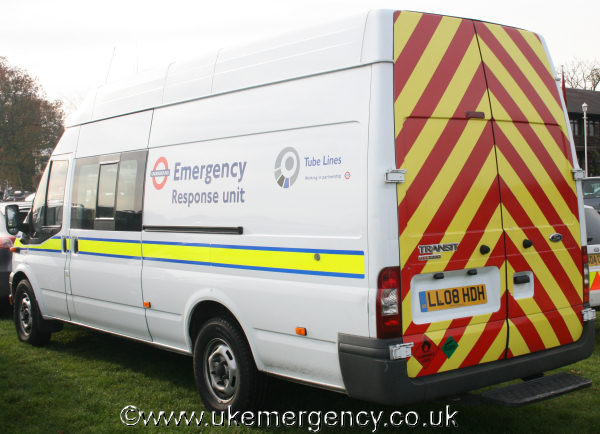
| REGISTRATION LL08 HDH |
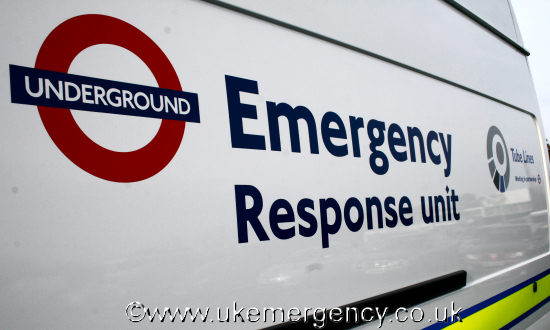
This Ford Transit is part of the emergency response fleet for London's Underground System. It carries no flashing lights and has the same red bonnet as the larger fire-engine style vehicles. A close up look at the graphics on the side of the van.
| REGISTRATION WX07 NWB |
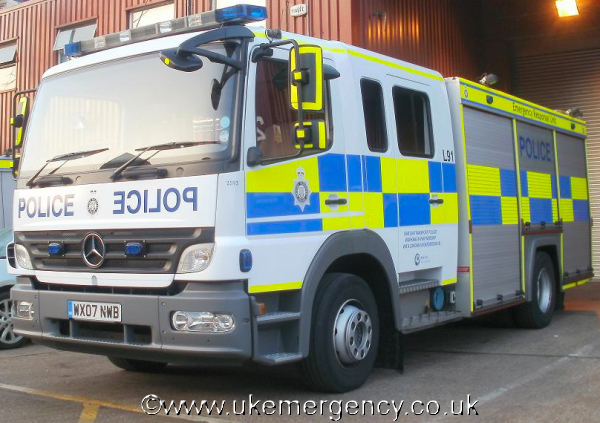
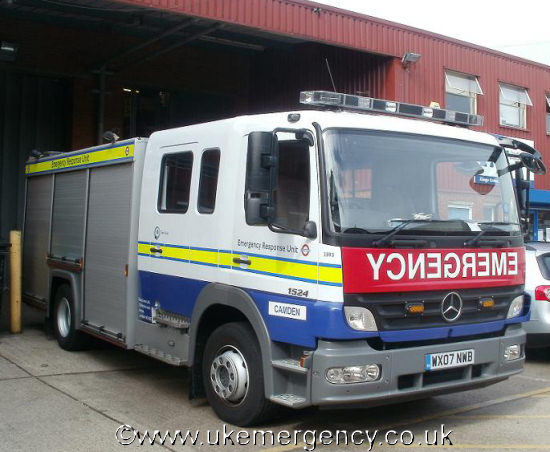
This Mercedes truck is marked in British Transport Police livery. It is actually a re-liveried railway response vehicle. This truck carries equipment to Underground stations to fix urgent track problems. The report into the 7/7 Bombings suggested these vehicles were given blue lights to aid their passage in emergencies. This would have required a change in legislation, so this vehicle has been re-designated as a police vehicle and is driven by a police officer. The same Mercedes Benz Atego truck is its previous livery, prior to February 2012. It is operated by Tubelines to provide an emergency response to incidents on the London Underground and is based at Camden.
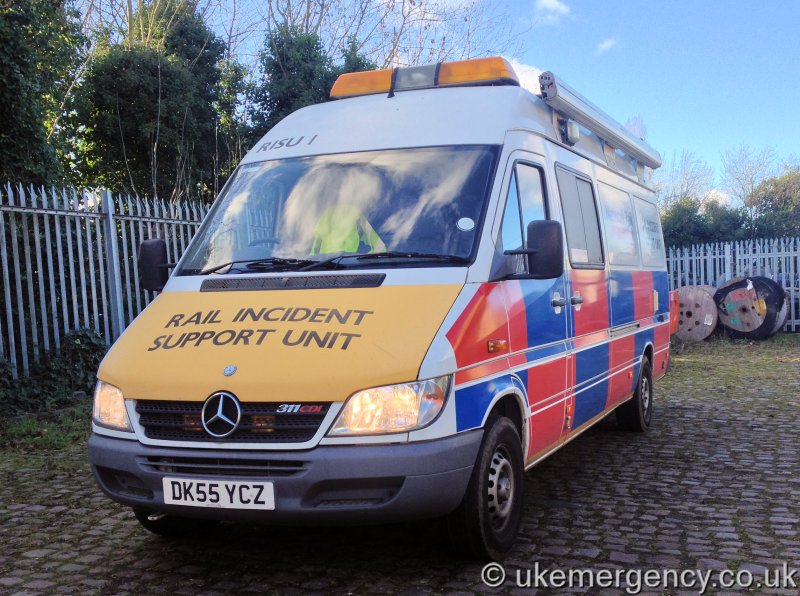
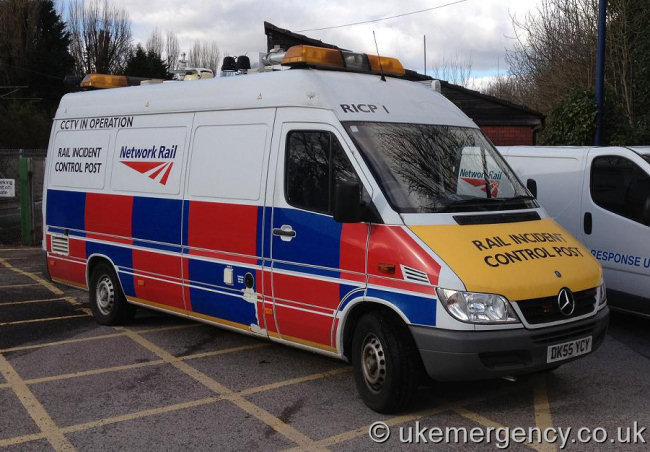
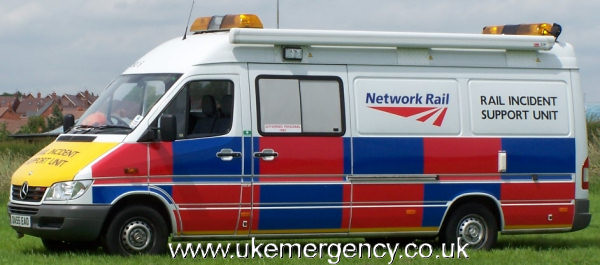
| REGISTRATION DK55 YCZ |
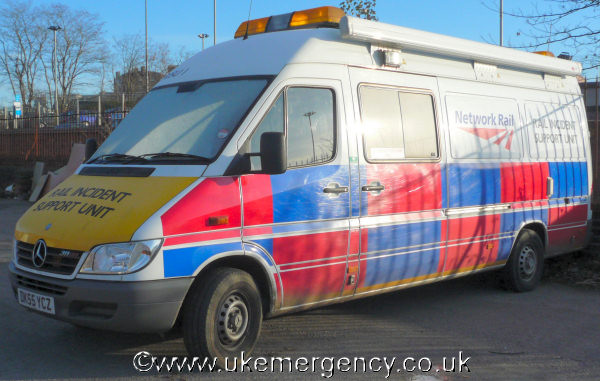
This Mercedes Benz Sprinter is used as a Rail Incident Response Unit. It carries red and blue battenburg markings and two full-width amber light bars on the roof.
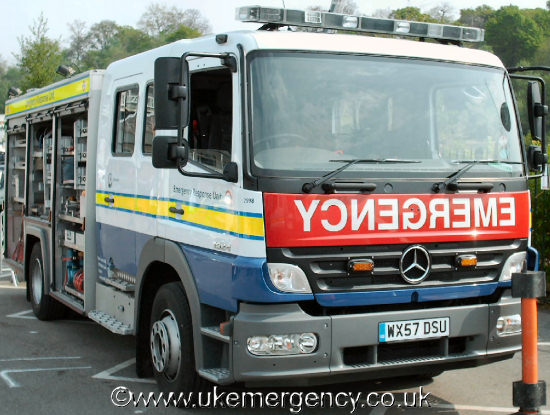
| REGISTRATION WX57 DSU |
This is one of the Emergency Response Units for use on the London Underground. It is a Mercedes Atego with John Dennis Coachbuilders bodywork. It is used to restore services after breakdowns and carries a range of equipment to do so. In the lockers are water pumps, jaws of life, airbags, chainsaws, generators, lighting and refreshments for the workers. It weighs 11 tonnes and cost £140,000. The 10 units are based at Acton, Camden, Vauxhall and Tottenham Hale. Update: Since late 2009 various changes have been made to the location of these 10 vehicles. They are now at Camden (2), Acton (4), Battersea (2) and 2 training vehicles. Tottenham Hale base closed on 2nd September 2009 and Vauxhall also closed and was replaced by a new location at Battersea.
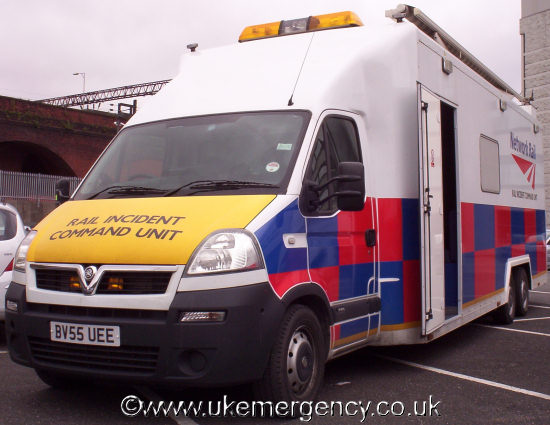
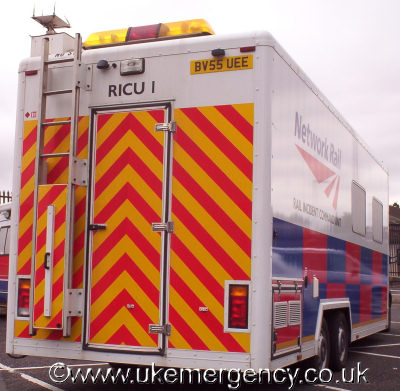
| REGISTRATION BV55 UEE |
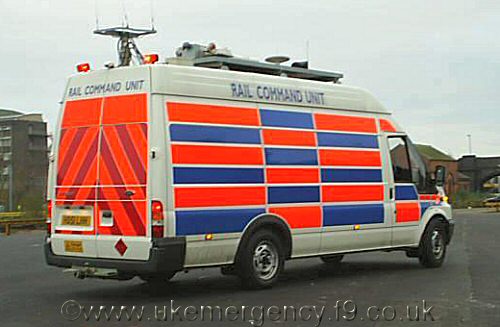
This is the only rail incident command unit run by Network Rail. The Vauxhall truck is based next to Doncaster station it is available 24 hours a day to attend major incidents on the railways. The rear view of the RICU which is fitted with satellite communications equipment on the roof. This vehicle is supported by 5 Rail Incident Control Point vehicles and these are further supported by 5 Rail Incident Support Unit vehicles (all Mercedes Sprinters).
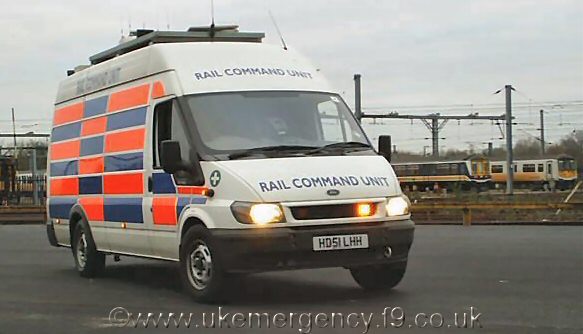
| REGISTRATION HD51 LHH |
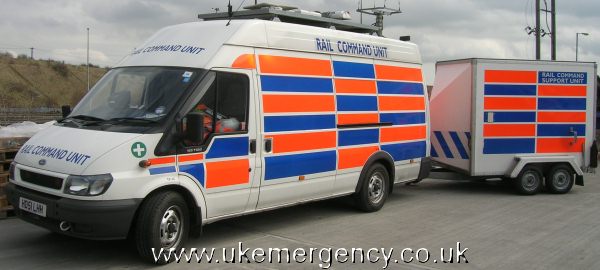
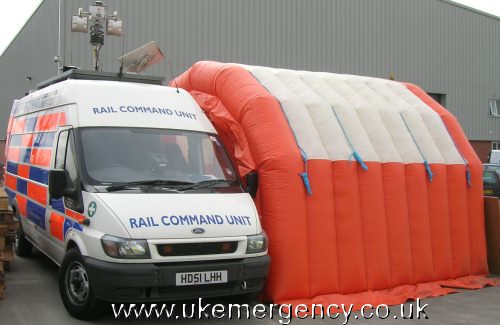
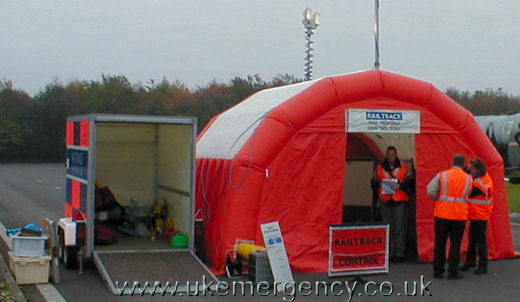
This NR Ford Transit has a red and blue rectangle livery that continues onto the trailer it tows. Inside the trailer is an inflatable tent that can be deployed alongside the Transit to expand the amount of space available at the command unit.
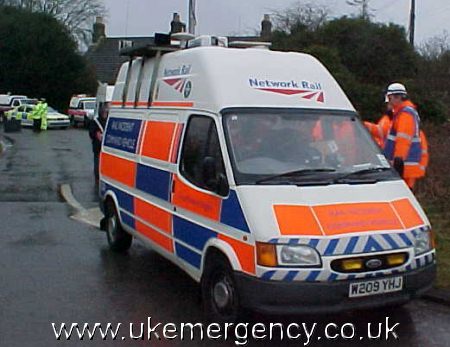
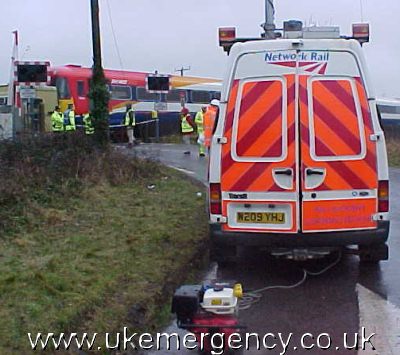
| REGISTRATION W209 YHJ |
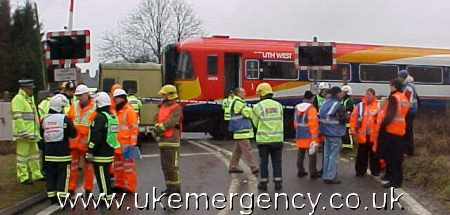
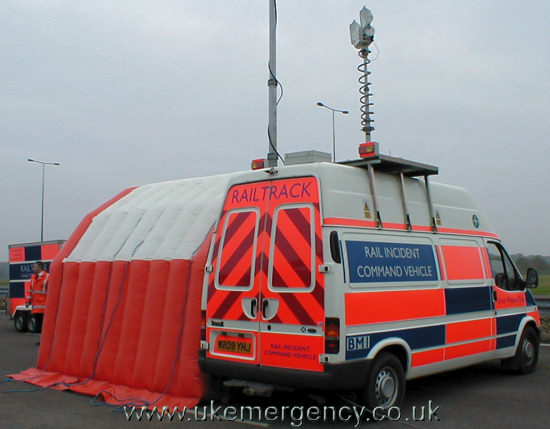
This NR Ford Transit is a Rail Incident Command Vehicle. In this photograph it has been deployed to coordinate a rescue and has its communications antenna raised. Other NR and police vehicles can be seen in the background. The rear view of the same Transit, showing the external generator. In the background you can see the exercise that the vehicle is helping to coordinate at a level crossing.
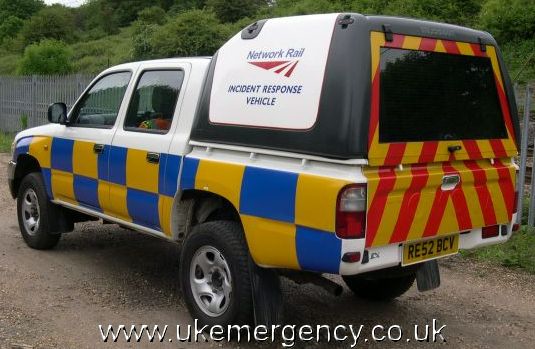
| REGISTRATION RE52 BCV |
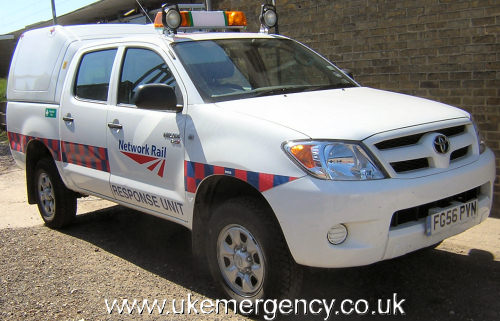
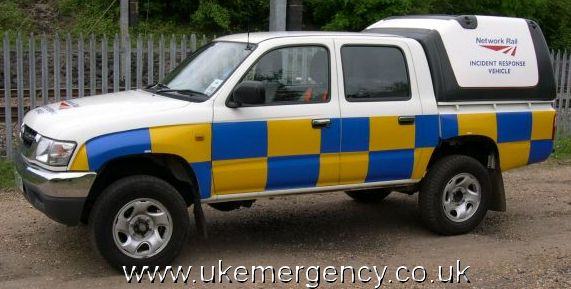
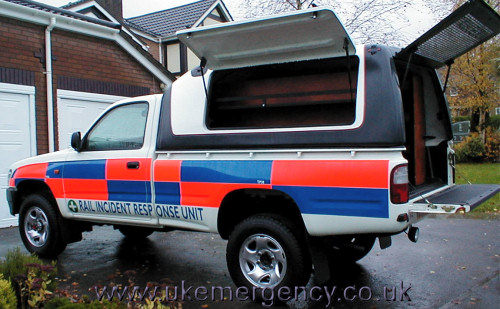
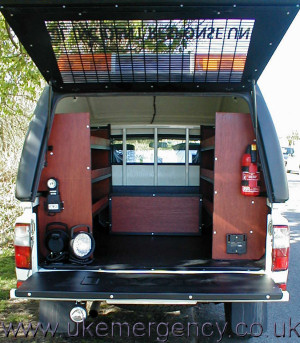
This NR Toyota Hi-Lux diesel is decked out in yellow and blue battenburg markings, very similar to a police vehicle. The only difference is that this car's livery is not reflective. The NR logo and car's use are shown to the rear. The rear view of the same car. There are two doors on the back, one opening upwards and the other downwards, to gain access to the equipment carried.
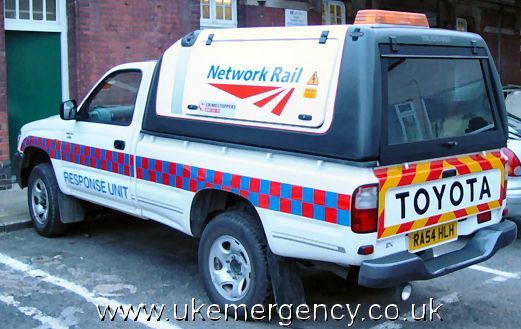
| REGISTRATION RA54 HLH |
This Toyota Hi-Lux 250 4x4 is two years newer than the one above and has a totally different livery. It has a side stripe of red and blue checkers, a larger logo and fewer markings on the rear. It also has an amber flashing light bar. Also you can see a 'Crimestoppers' advert on the side.
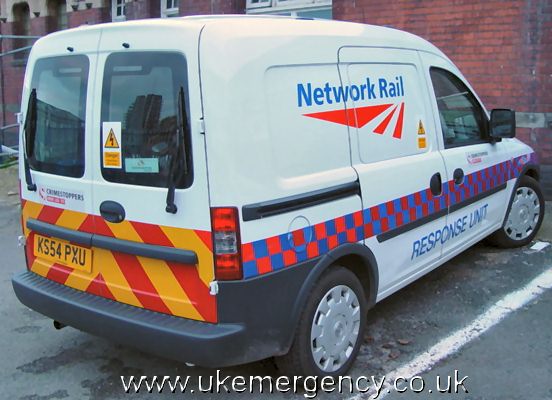
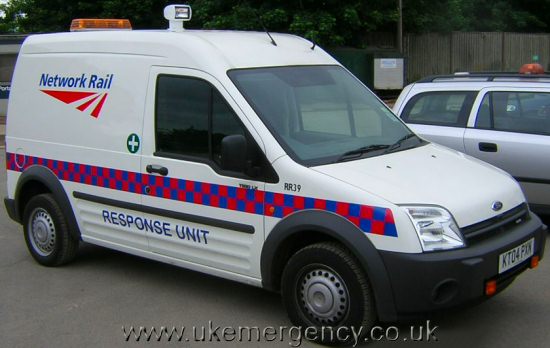
| REGISTRATION KT04 PXN |
This is a Clapham Junction (London) based Network Rail Ford Transit Connect. It is call-sign RR39 and operates as a rapid response unit. The rear and offside view. This type of vehicle has replaced some Toyota Hi-Lux's (shown in the photographs) in urban areas where the 4x4 capabilities are not required.
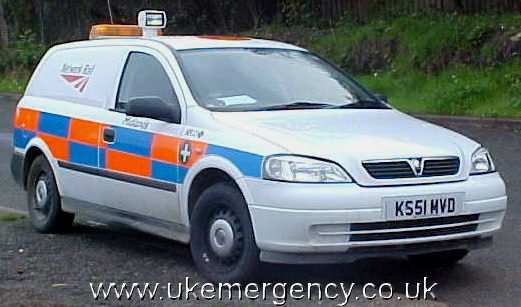
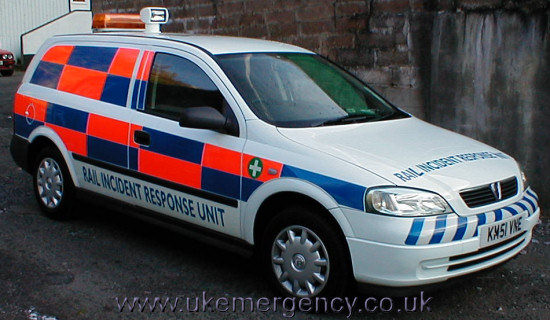
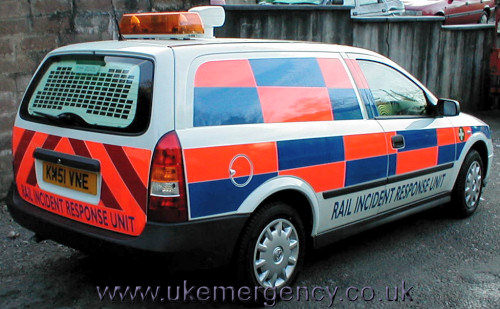
| REGISTRATION KM51 VNE |
This Vauxhall Astra estate is a Rail Incident Response Unit with Network Rail. It has call sign 'RR1'. It has more livery than the other 51-plate Astra above. Also shown is the rear of the same car, showing its blue and red battenburg markings, roof-mounted floodlight and amber flashing lights.
This overhead shot of a Toyota Hi-Lux 'Rail Incident Response Unit' shows off the roof markings. The call sign is RR15 (Romeo Romeo One Five) which is shown on both front wings and the roof. The orange spot on top of the cab helps to identify it as a rail response vehicle. All of these vehicles are fitted with satellite tracking devices so the control room knows where they are.
| REGISTRATION HD51 LHH |
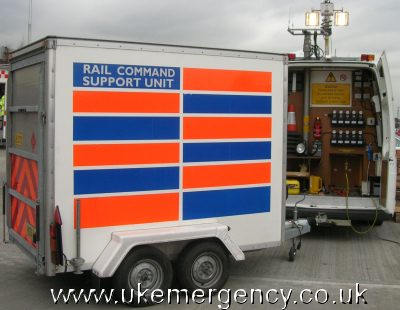
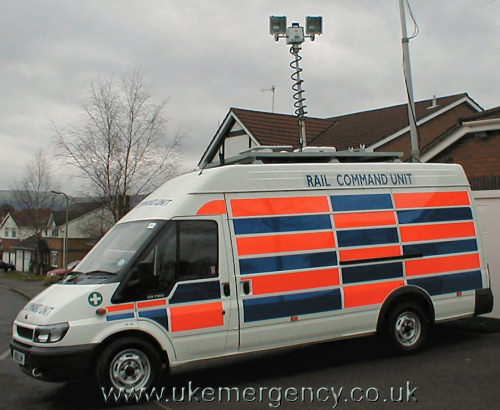
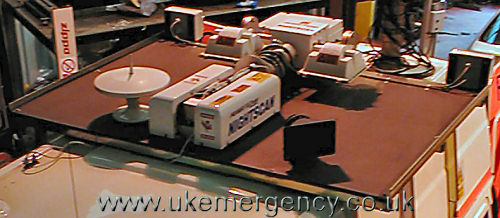
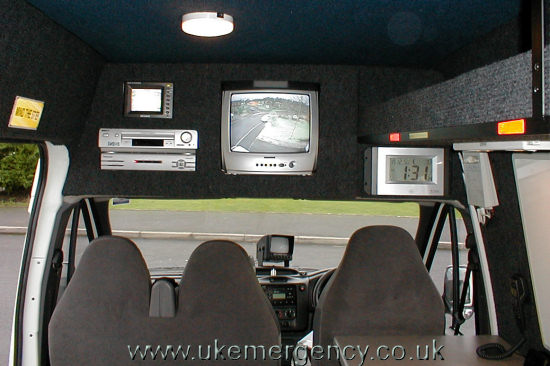
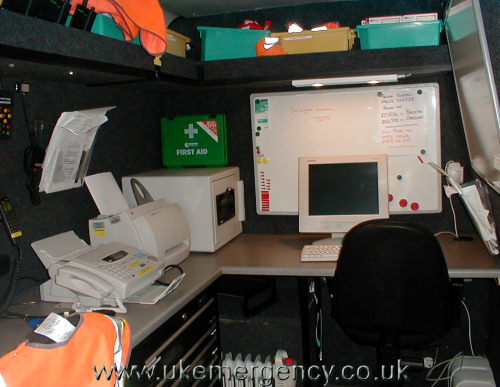
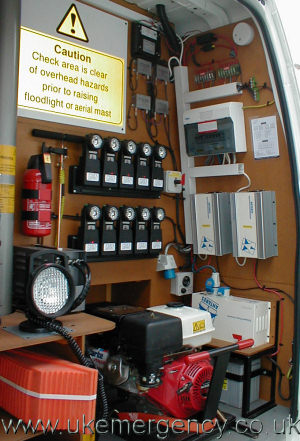
In the next few photographs we take a look around this Network Rail Ford Transit 'Rail Command Unit'. It is used to attend major incidents on the railways. It is a high-roof, long-wheelbase model with amber flashing lights behind the front grille. The vehicle is decked out in orange and blue battenburg markings, with gaps between them. On the roof is an extending Nightscan floodlight mast (with cctv camera), a radio mast, video and satellite facilities (to receive pictures from a helicopter). Looking down onto the roof, you can see how the floodlights are stowed when the vehicle is in motion. Inside, we can see the TV to see the cctv pictures, as well as the video to record them alongside other flush-mounted equipment. The vehicle also acts as a mobile command centre at railway incidents, offering an office equipped with phone, fax and tracking facilities. Opening the rear doors of the Transit reveals an array of useful equipment, including lights and a generator. The controls for the telescopic masts can also be seen. The Rail Command Unit also has a trailer which complements its work. Carrying the same livery, it carries an inflatable shelter which fits alongside the passenger side of the van. The shelter is used to extend the amount of covered space there is for the command centre. The other side of the shelter. In this scene from an exercise an older Ford Transit is being used. It carries 'Railtrack' wording, the predecessor of Network Rail, and 'Rail Incident Command Vehicle'.
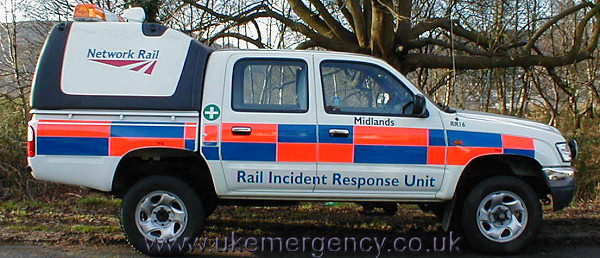
| REGISTRATION RX02 KTV |
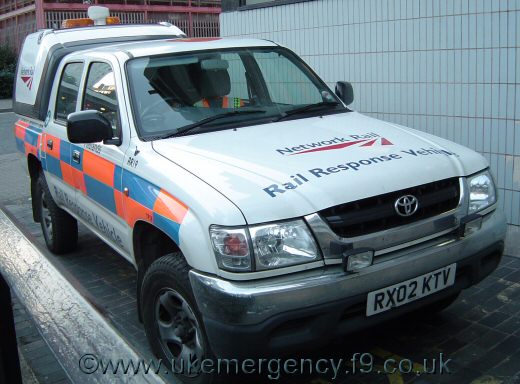
This is a Network Rail 'Rail Response Vehicle' Toyota Hi-Lux. It is one of a fleet of Toyota 4x4s, both single- and double- cabbed versions, that NR operate. It has a band of blue and orange battenburg down each side and is fitted with an amber lightbar. It also has an roof-mounted spotlight. It has callsign RR19 and is based in the Midlands.