Documenting UK emergency vehicles past and present
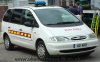
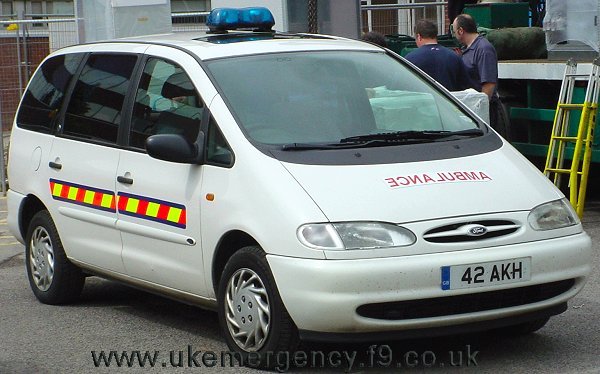
42 AKH A Ford Galaxy private ambulance. This minimally marked vehicle is owned by a dentist called Archie who works in Selby. It is quite rare to see an ambulance with a personalised registration plate – AKH are Archie’s initials.
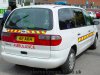
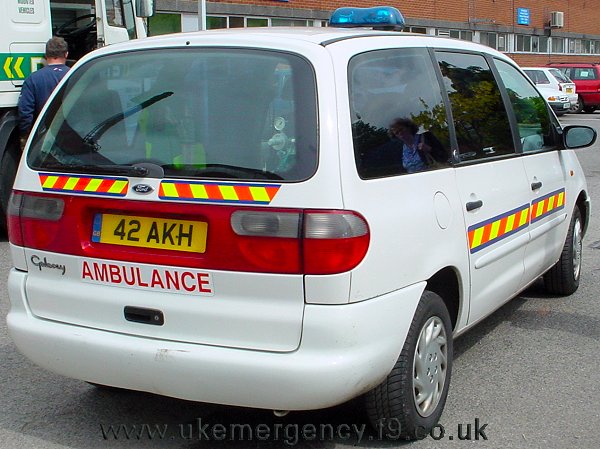
The rear view. The vehicle can carry a patient lying flat on a stretcher and also carries basic medical equipment.
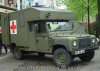
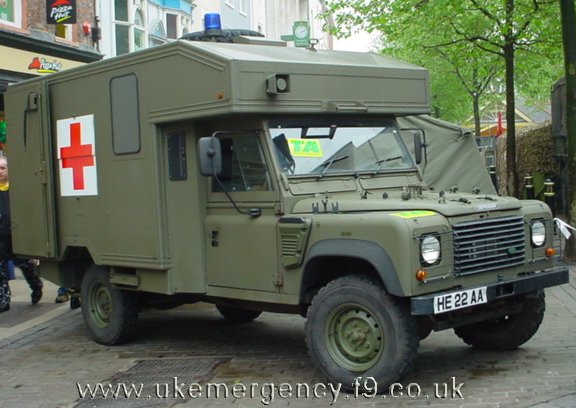
HE 22 AA A Terratorial Army Landrover Defender, with bodywork to expand the height and width inside. Observe the camoflaged siren unit, army registration plate, roof mounted spare wheel (instead of bonnet mounted) and minimalist blue lights.
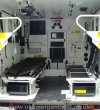
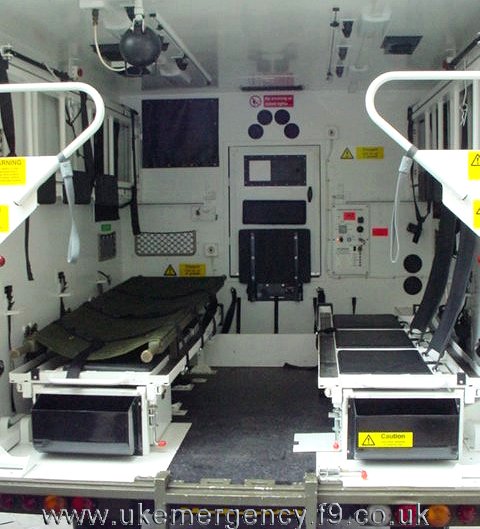
Inside the patient end of the above Landrover. It look as basic as a barn with all of the equipment removed, but is no doubt a welcome sight to sick or injured soldiers. Notice that there seems to be a plethora of yellow warning stickers and a very small access door to the cab. When non-operational, the vehicle can be used as a normal transport vehicle for troops. That is why the red cross on the side has a fold down flap to cover it up (also so as not to contravene the Geneva Convention, running soldiers around under the red cross).
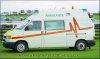
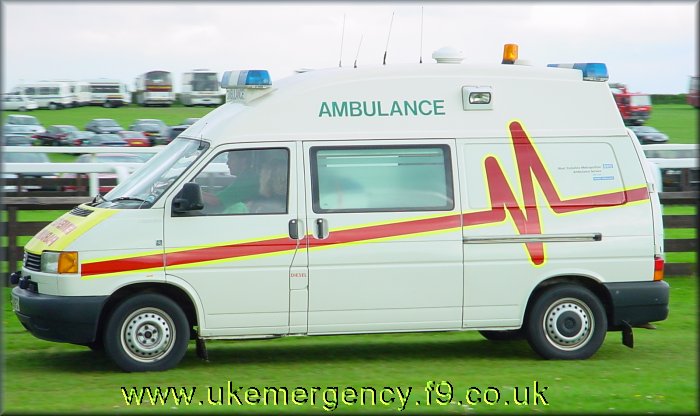
R231 DFC A WYMAS (West Yorkshire Metropolitan Ambulance Service) VW ambulance with Collet bodywork. This vehicle is being used at a horse racecourse to follow the jockeys as they race to pick up any injuries. Notice the orange rotating beacon on the roof which is used to comply with the CAA’s (Civil Aviation Authority’s) rule that all vehicles on an airfield should display such a flashing light.
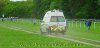
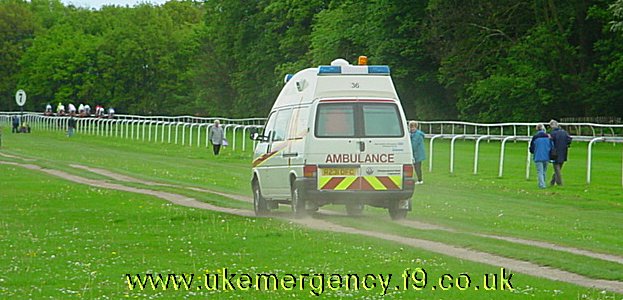
The above vehicle in use, with the horses racing in the background.
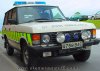
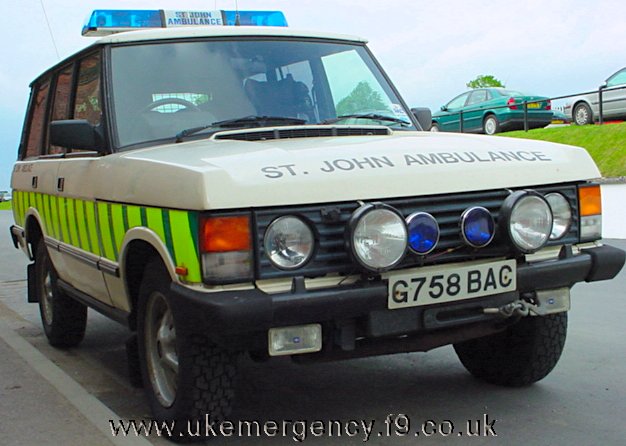
G758 BAC A St John Ambulance Range Rover. This vehicle which was new in 1989 has undergone a few changes since first being used by St John’s. It was first spotted in 1996 when it had a different livery (just a yellow stripe up the side). In 1999 it had it’s current livery, and by 2002 it had grown two repeater blue lights on the front grille.
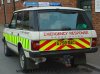
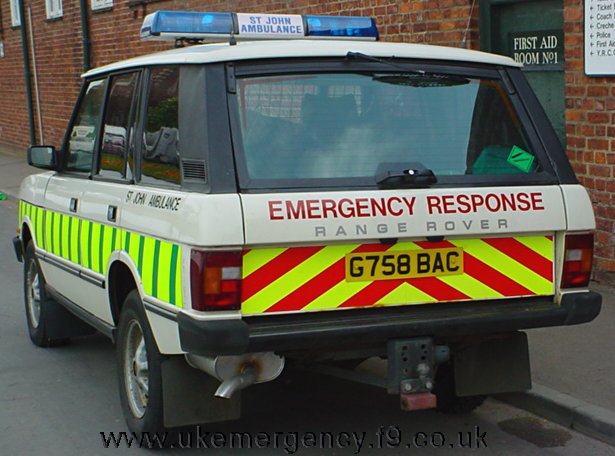
The rear view. In this photograph, it is being used in a pro-active role at a racecourse. It has a the winch on the front, and has just been fitted with a new exhaust.
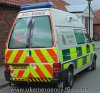
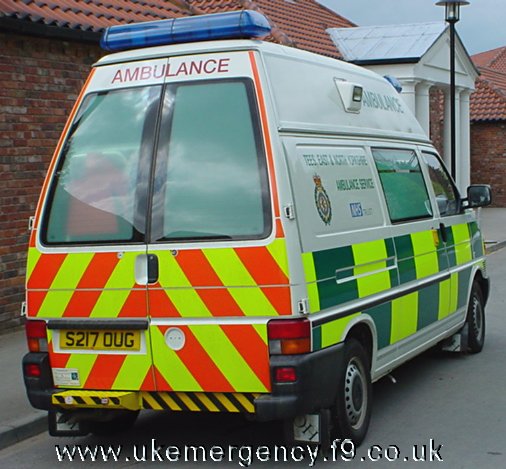
S217 OUG A TENYAS VW Collet. Notice that the colour scheme and rear doors are significantly different to the neighbouring WYMAS ambulance (above).
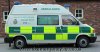
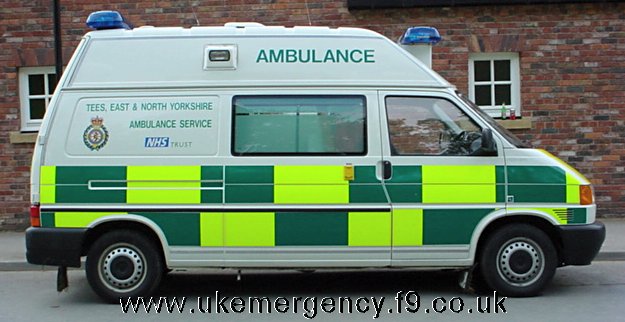
The side view, showing the differing heights of the roof blue-light bars.
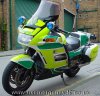
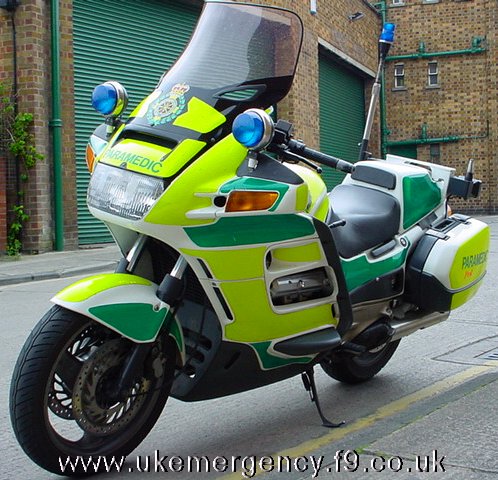
A Honda Pan-European rapid response paramedic motorbike. Detachable panniers are cases of medical equipment and the small writing on them says ‘York’ to ensure they are returned to the correct bike at a major incident.
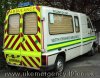
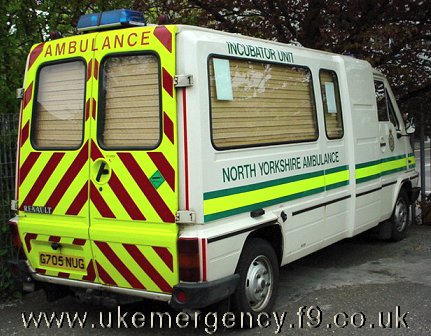
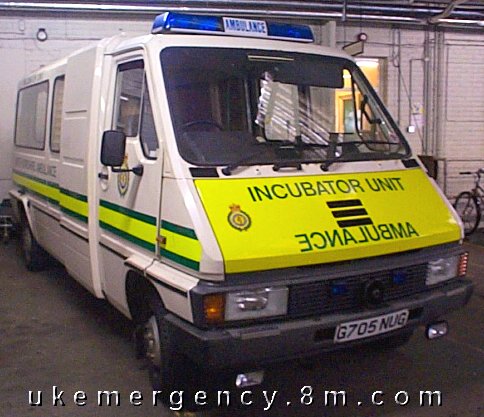
G705 NUG The rear view of the aged Renault incubator unit. TENYAS have not re-liveried this vehicle because it’s nearing the end of its working life. It still has the defunct ‘North Yorkshire Ambulance’ writing on it.
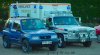
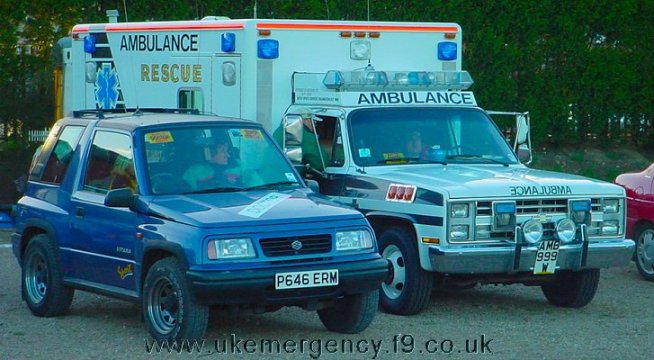
P646 ERM and AMB 999W A private doctor’s service car and private ambulance belonging to UK Event Safety. Both vehicles are being used in a pro-active role at a rallying event. The ambulance has an American style body with American style livery and lights in every conceivable location. It also has a UK cherished registration of AMB 999W.
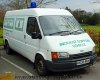
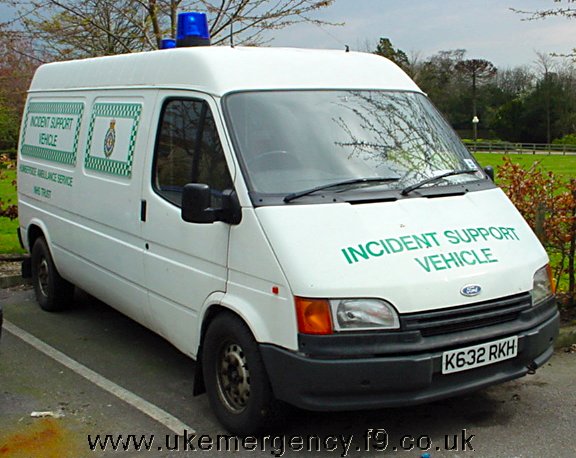
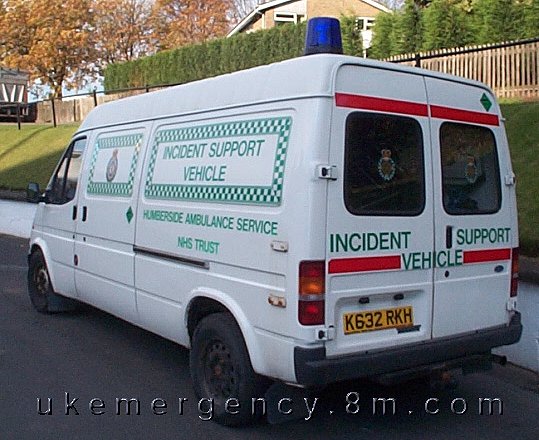
K632 RKH A 1992 Ford Transit Incident Support Vehicle from Humberside Ambulance Service. It has few markings by modern standards and was photographed at TENYAS’s HQ at Skelton, near York.
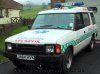
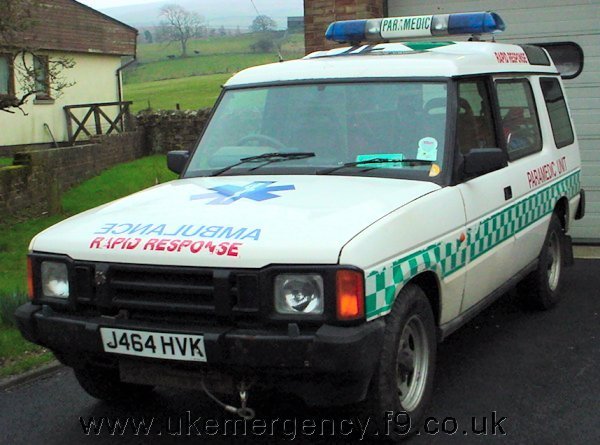
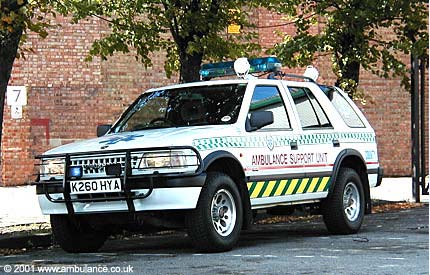
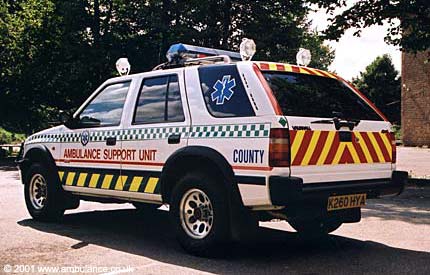
J464 HVK A J-reg Landrover Discovery at the St. John’s Chapel station of the NEAS in rural Weardale. This vehicle is showing signs of it’s age with the livery flaking off.
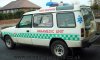
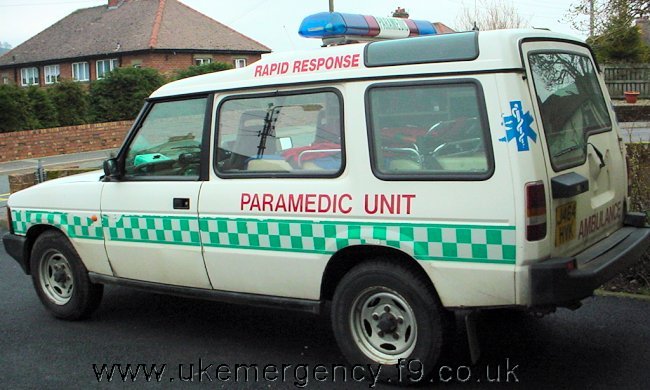
The side and rear view. Despite its condition, this ambulance is ideal for travelling long distances to emergencies in the Wear valley. It is faster than a conventional ambulance and carries all of the essential equipment, including a stretcher.
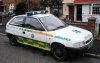
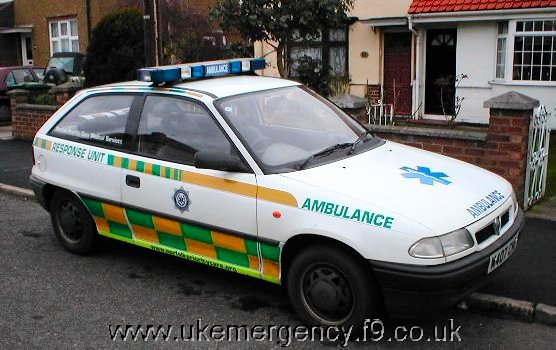
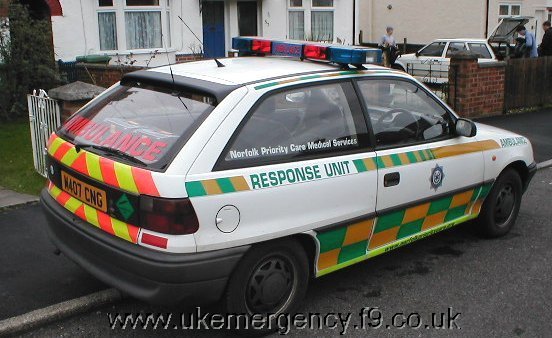
M407 CNG A Norfolk Priority Care Vauxhall Astra response unit ambulance car.
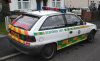
The rear view. This vehicle was originally used by Norfolk Constabulary.
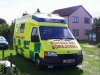
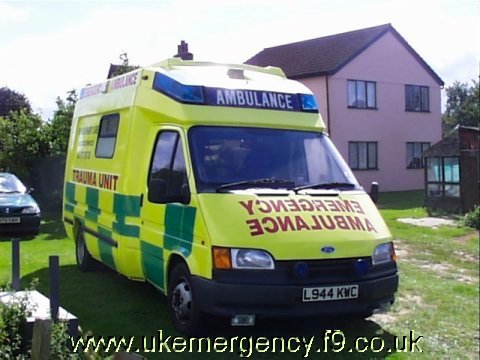
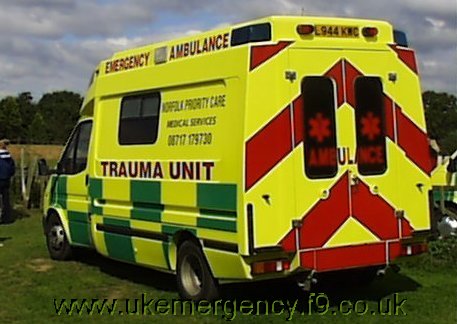
L944 KWC A Norfolk Priority Care 1994 ambulance based on a Ford Transit. This vehicle was originally with Essex Ambulance Service.
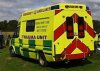
The rear view, showing the livery that you cannot fail to miss!
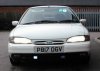
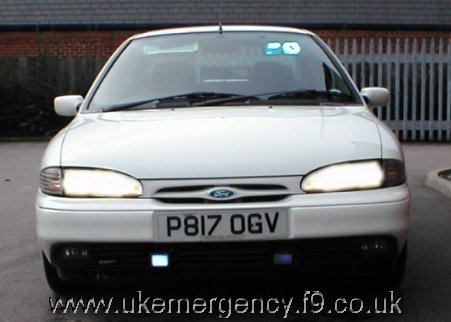
P817 OGV A mark I Ford Mondeo ambulance car. This vehicle can be deployed completely unmarked, or can carry magnetic livery and a roof bar of lights if required. It has blue and red flashing lights on the rear parcel shelf and a matrix sign. It is also with Norfolk Priority Care.
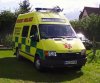
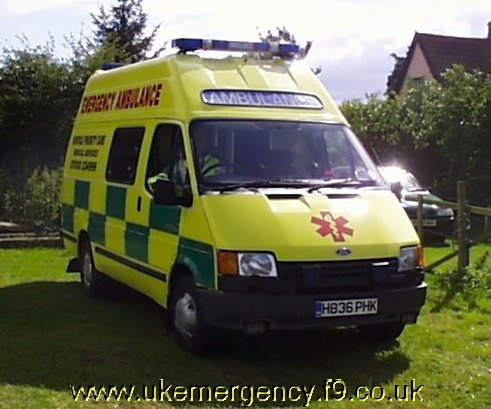
H836 PHK Another Norfolk Priority Care ambulance, this time based on the older 1990 Ford Transit. This vehicle was originally with the Royal Air Force.
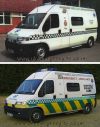
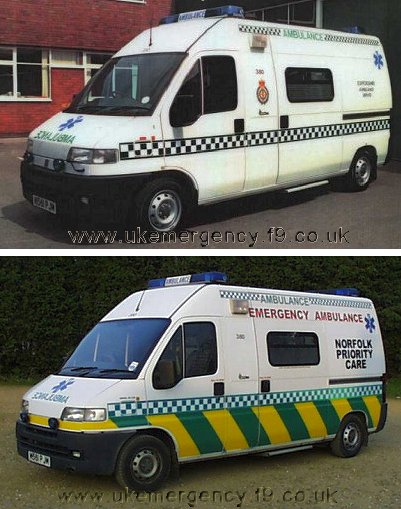
Here are two pictures of the same vehicle two years apart. This Fiat Ducatto ambulance was originally owned by Staffordshire Ambulance Service and was vehicle number 380. The vehicle had some frontal damage and was sold to Norfolk Priority Care which they repaired (hence no wipers on the headlights). They decided to keep Staffordshire’s 380 number on it and added some of their own livery.
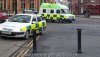
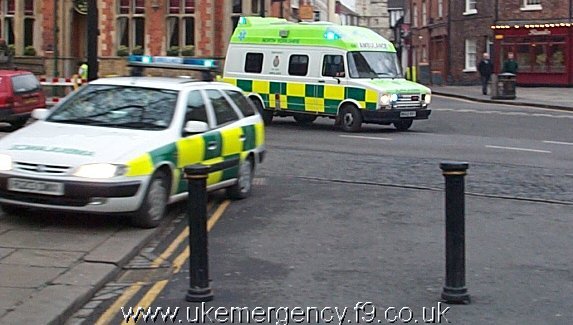
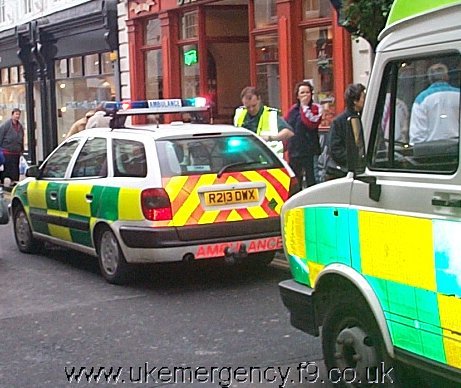
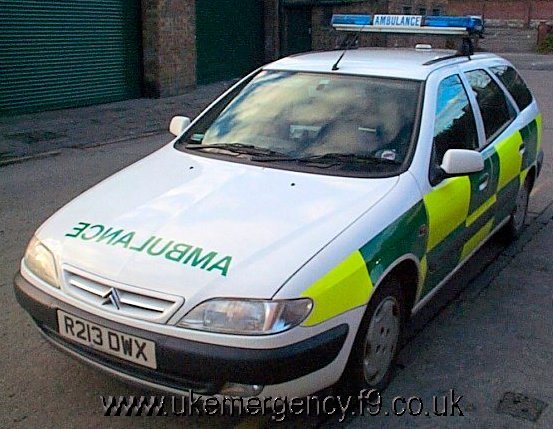
R213 DWX A Citroen Xsara (pictured below) rapid response ambulance car escorting an ambulance to an emergency. Both vehicle drove onto the pavement to pass bollards in the road.
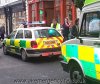
A few seconds later, both vehicles are on scene. The rear-facing red lights on the roof bar can be seen, as well as the blue and red repeater lights mounted inside the rear screen.
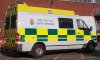
A re-liveried TENYAS ambulance.
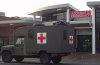
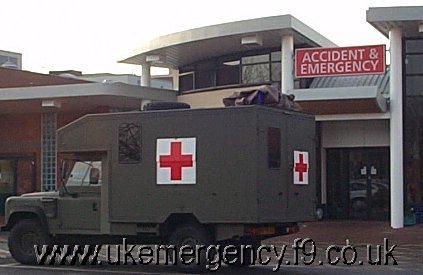
An army Landrover (with blue light fitted) at an accident and emergency department.
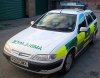
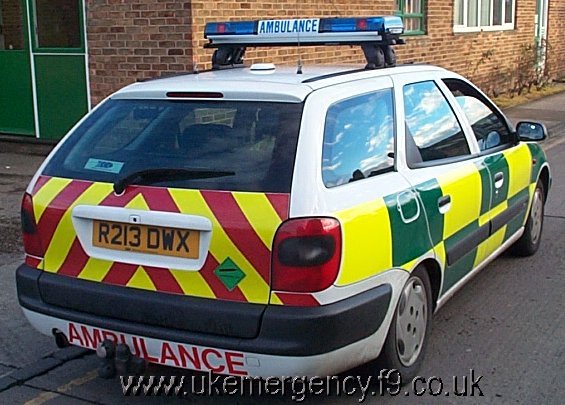
D213 EWX A Citroen Xsara diesel rapid response car. The blue bar of lights are temporarily attached by using roof-rack mounts.
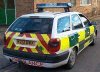
The rear view. Notice the green diamond sticker warning that the vehicle carried compressed gas.
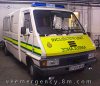
G705 NUG A 1989/90 Renault incubator unit ambulance. This vehicle is soon to be replaced (2001).
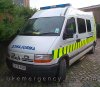
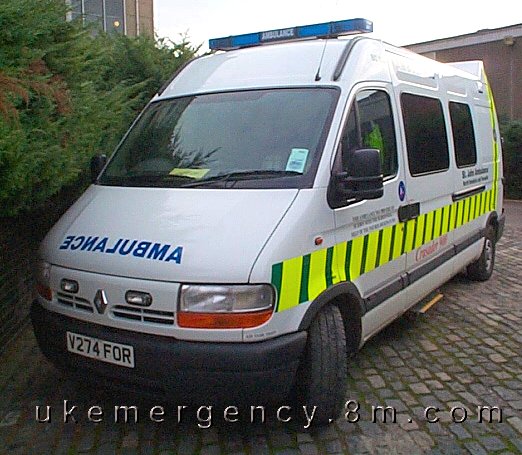
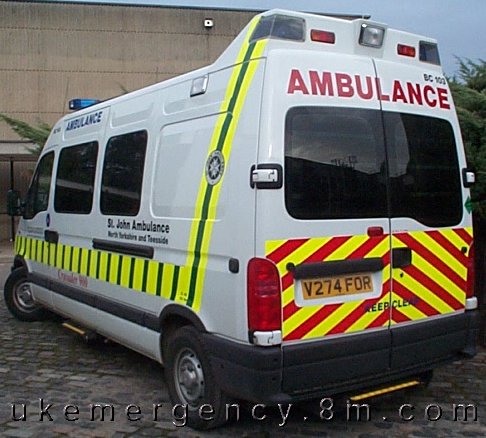
V274 FOR The St John Ambulance Crusader 900. Billed as ‘the variable purpose vehicle for the 21st century’ this £40,000 vehicle has been purpose built for the St John’s and is standard throughout the country.
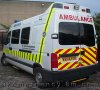
[Rear View] This vehicle is specially designed to adapt from one role to another. It can be a mobile first aid unit, and accident and emergency vehicle, a special baby care unit, a mobile care unit and a community transport vehicle.
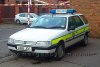
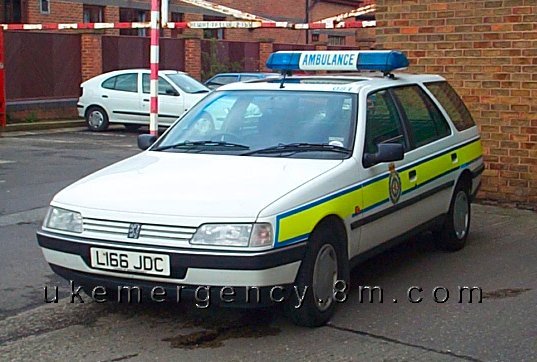
L166 JDC A 1993 Peugeot estate ambulance car.
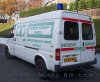
K632 RKH An aged Humberside ambulance incident support vehicle.
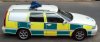
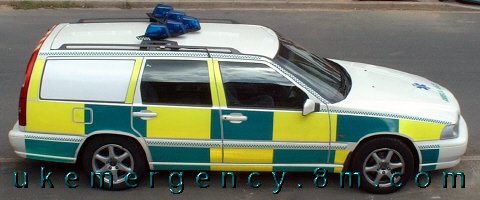
A Volvo ambulance car belonging to a private company.
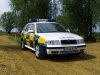
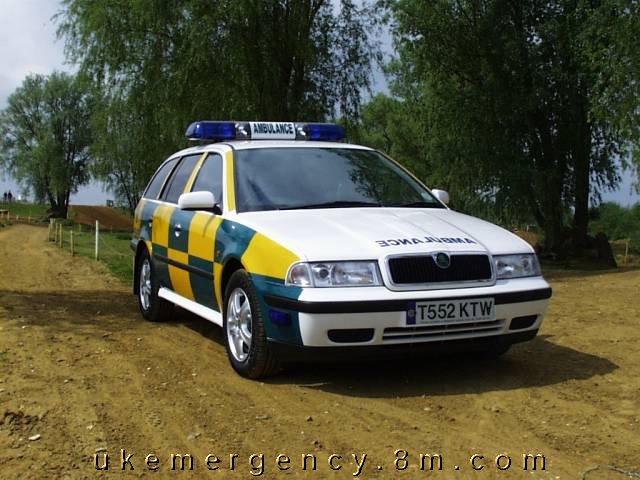
T552 KTW This is a Skoda Octavia “Zeus” Cardiac Fast Response vehicle from Norfolk Priority Care.
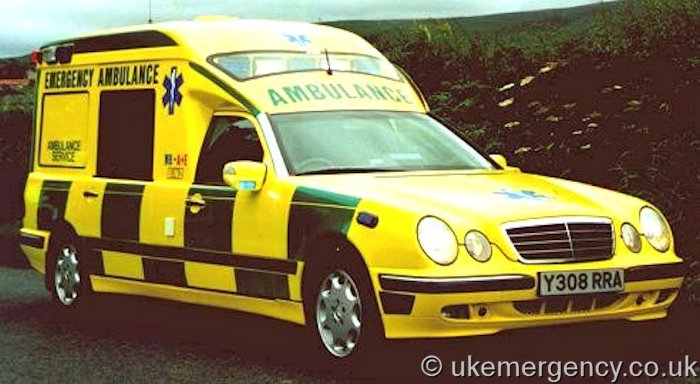
Y308 RRA is a luminous yellow Mercedes ambulance which is used in the rural areas around Wooler, Northumberland.
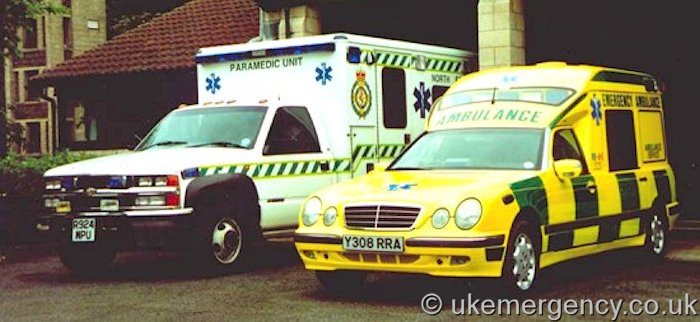
The same vehicle with a regular NEAS Cheverolet ambulance.
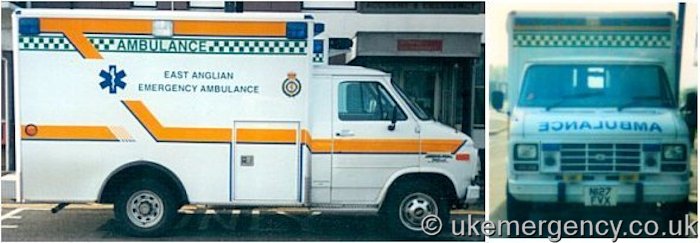
Here we have a Chevrolet ambulance from the East Anglican fleet. N127 FVX has a 6.2 litre diesel engine and is pictured here outside the James Pagent Hospital’s Accident and Emergency department, Gorleston, Norfolk.
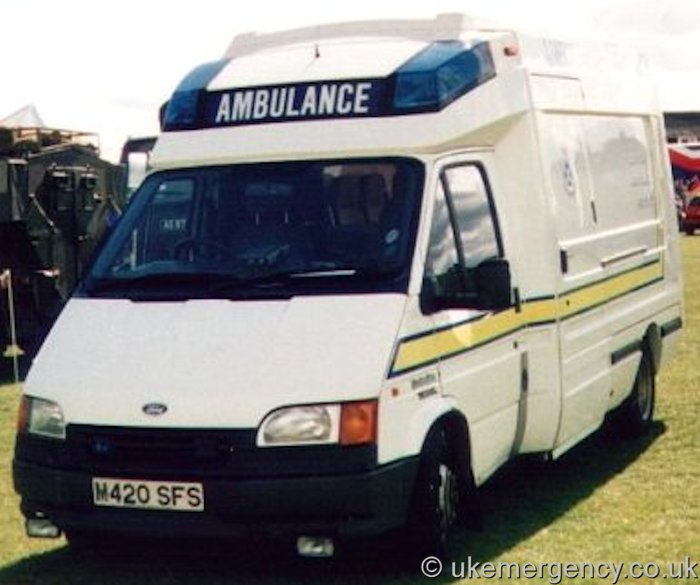
Here we have two photos of M420 SFS, a Scottish ambulance Service Ford Transit.
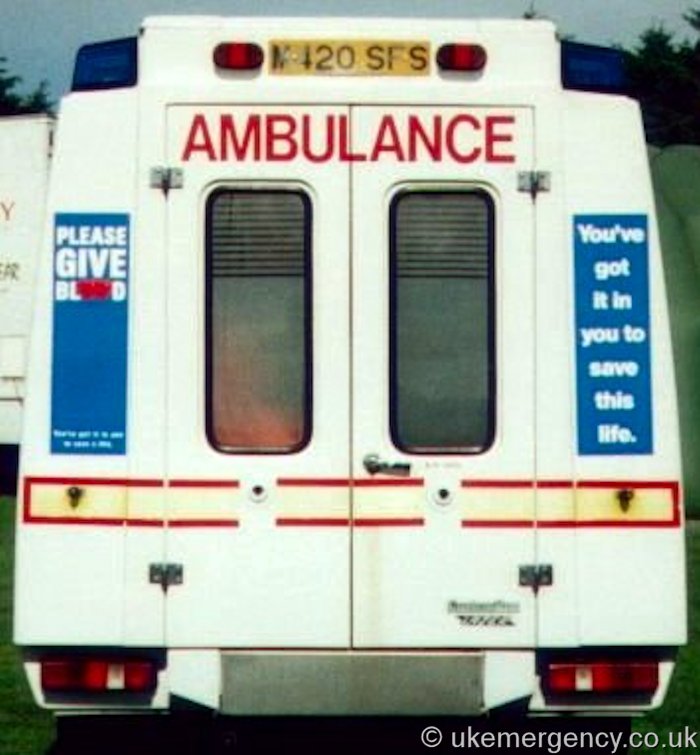
The rear view
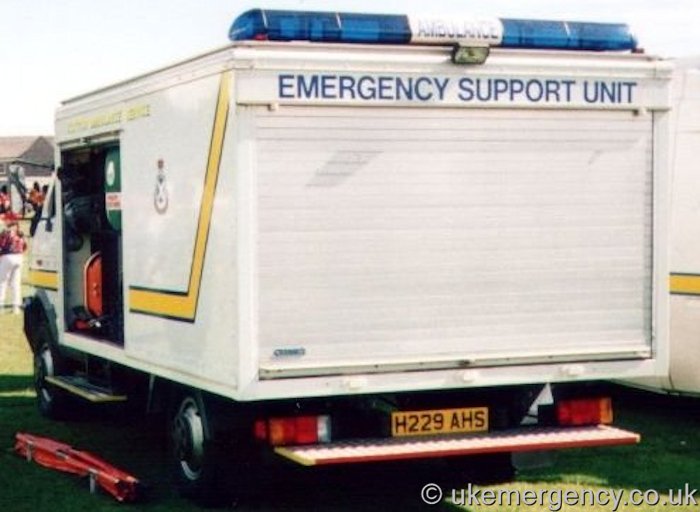
H229 AHS is an Emergency Support Unit based in Aberdeen. It is used during major incidents and holds a large number of fold up stretchers.
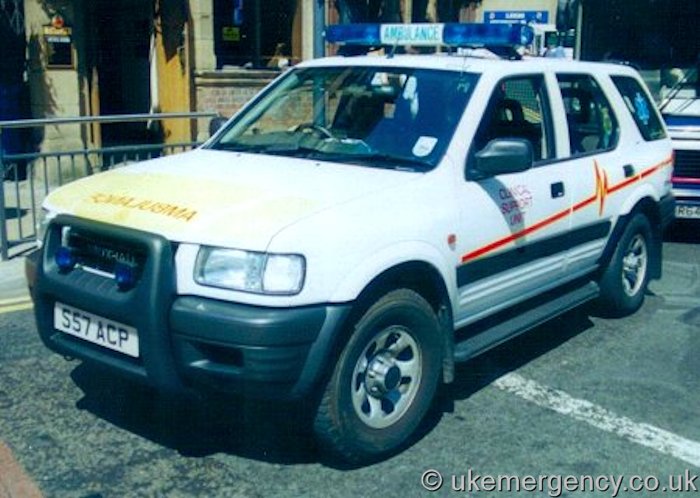
S57 ACP is a WYMAS Clinical Support Unit ambulance. This Vauxhall Frontera 4×4 was spotted in Leeds.
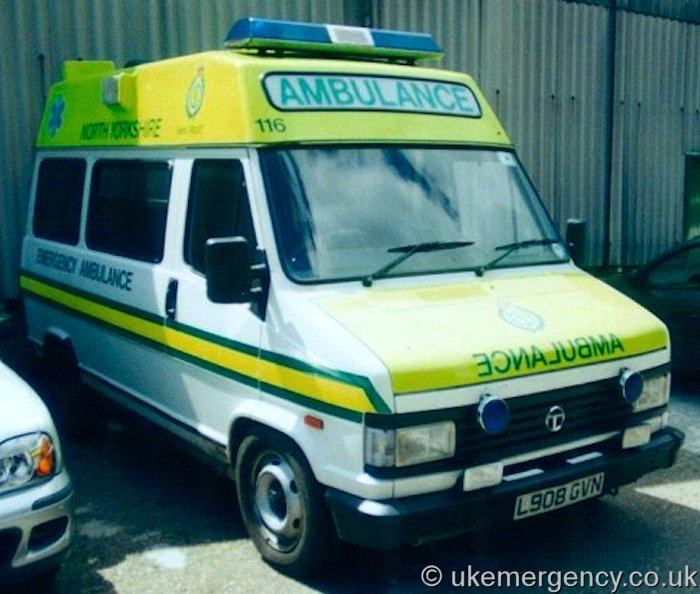
L908 GVN is a 1993 Talbot ambulance from TENYAS’s fleet.
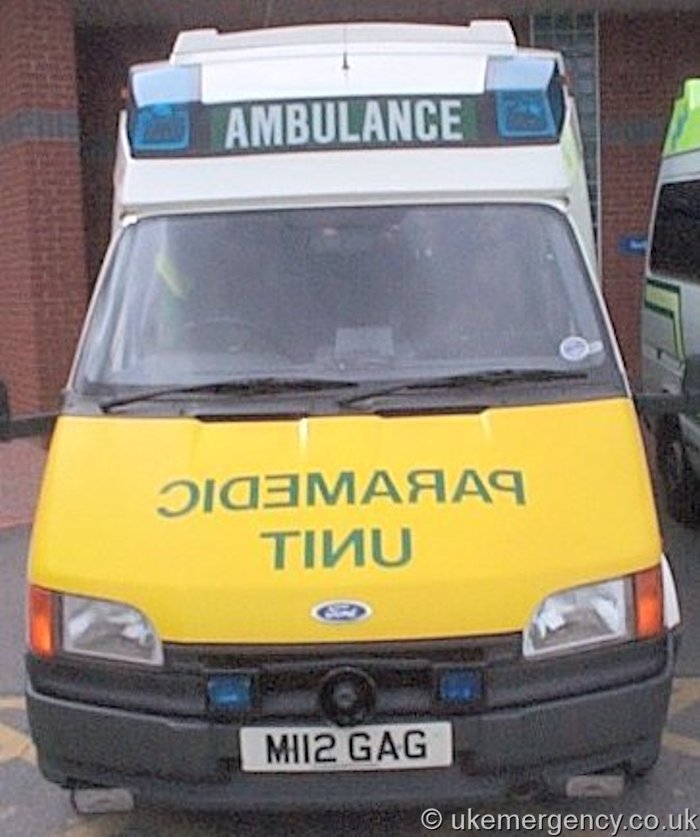
M112 GAG is a Ford Transit from WYMAS. Notice the bonnet is a different colour to the rest of the bodywork and the location of lights and the siren.
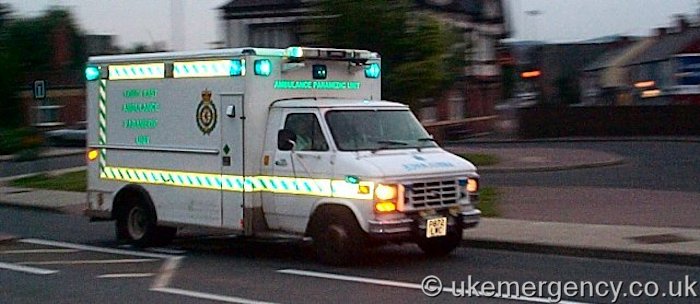
P872 LWC is a NEAS Cheverolet on a blue light run in Gateshead.
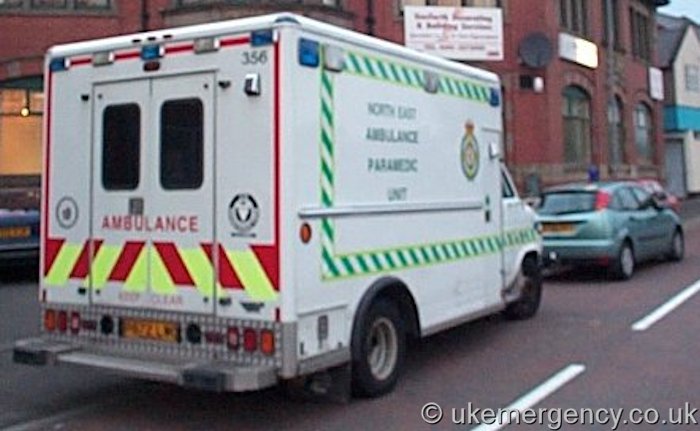
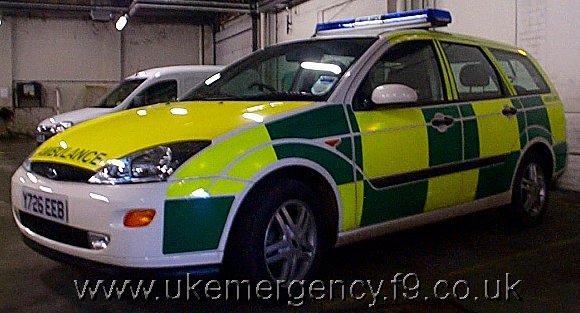
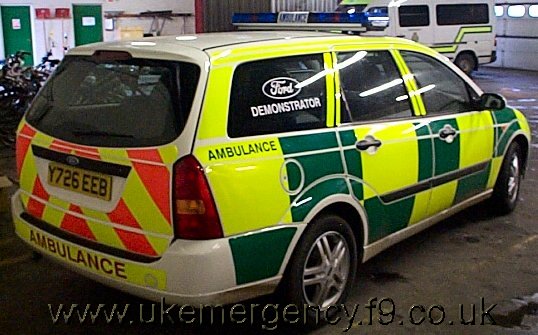
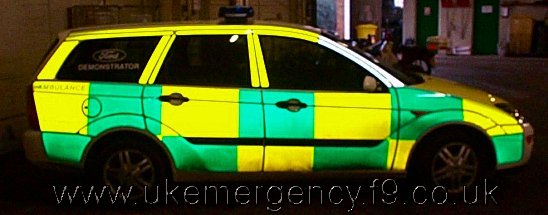
The above ambulance is now parked behind a rapid response (unmarked) Ford Focus. Rapid response cars are being used increasingly in the NEAS area to cut down response times to meet Government standards.
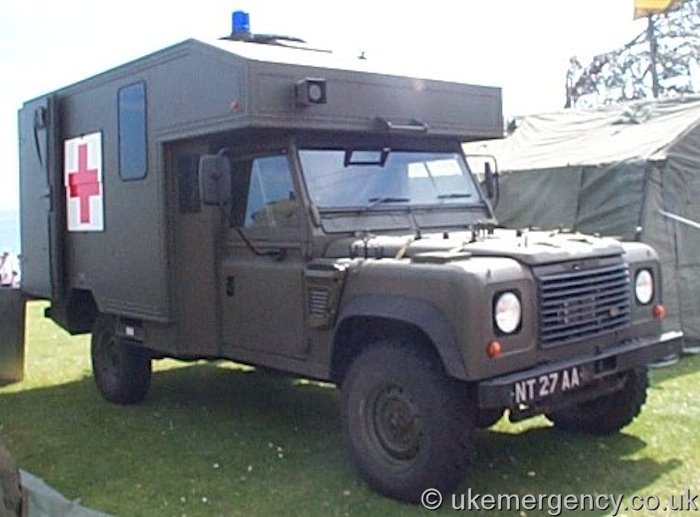
NT 27 AA is an Territorial Army Ambulance. Notice the location of the siren and the somewhat contradictory camouflage colour with large red cross.
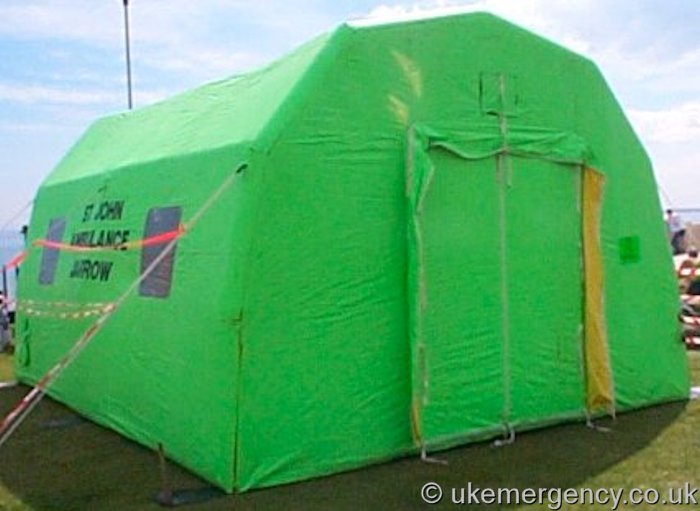
Here is a St. John Ambulance emergency shelter. It is collapsible and can be deployed anywhere that it is needed.
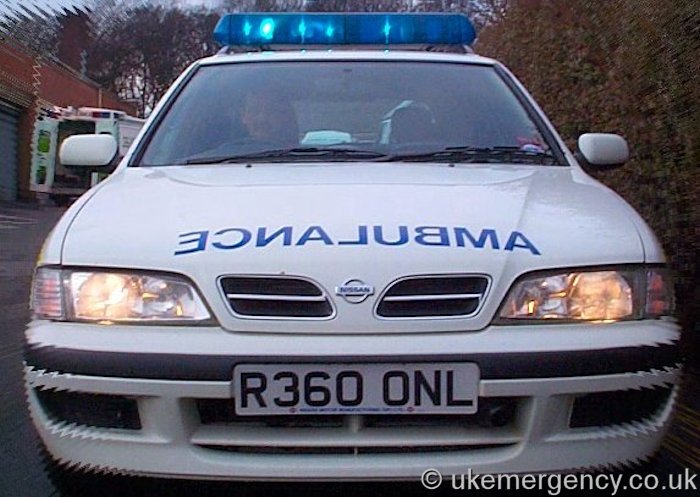
R360 ONL is a Nissan Primera. It has a 2.0 litre engine and is used as a quick response unit. Nissan used this car as a trial for new electronic equipment. A representative would come out periodically and remove the ash tray to reveal a data port. They would connect a laptop computer to download how many times and for how long each gear had been used for. It was intended that the car would cover 100,000 miles in 18 months, which is near impossible as it started its life doing short patient transportation duties before it was converted to quick response! Incidentally, the electronic gear watching equipment made the car no different to drive to any other.
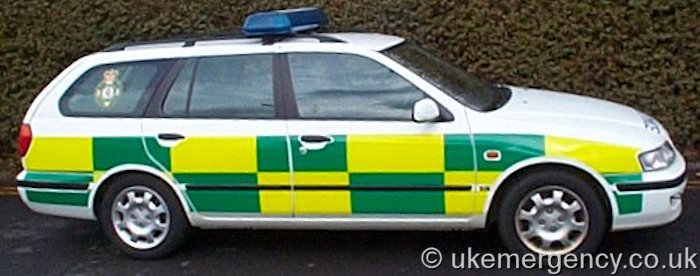
The side view of the Nissan test car.
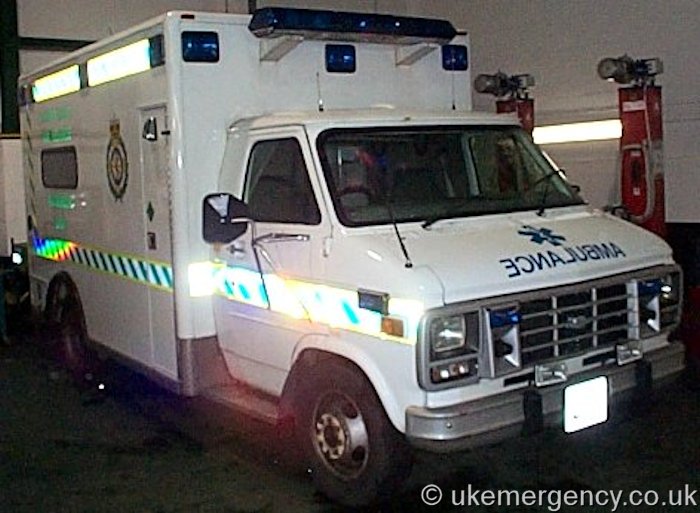
A Chevrolet ambulance. The chassis has been adapted to cope with winding British roads instead of the traditionally straight American ones.
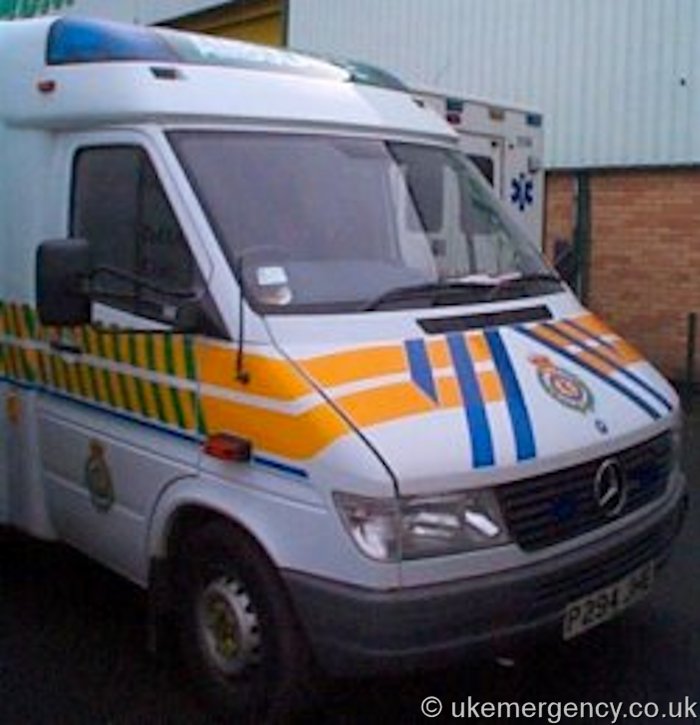
P294 JNE is a Mercedes Sprinter based ambulance.
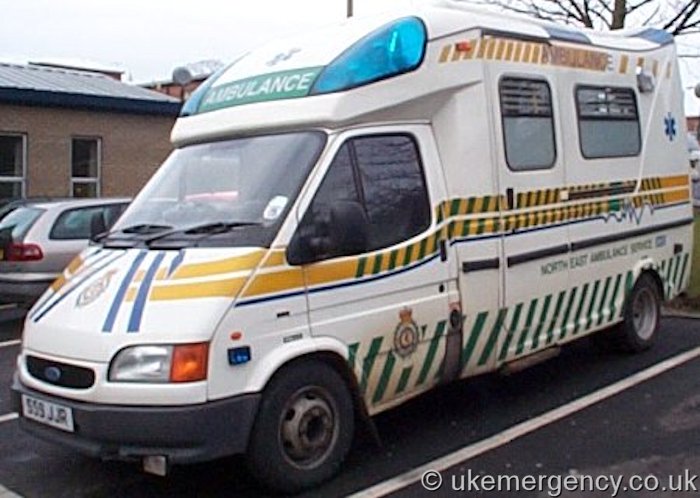
S59 JJR is a Ford Transit ambulance with a larger back on it. You can see the bright livery from the front and note the odd place for the repeater blue lights which are normally mounted on the grille.
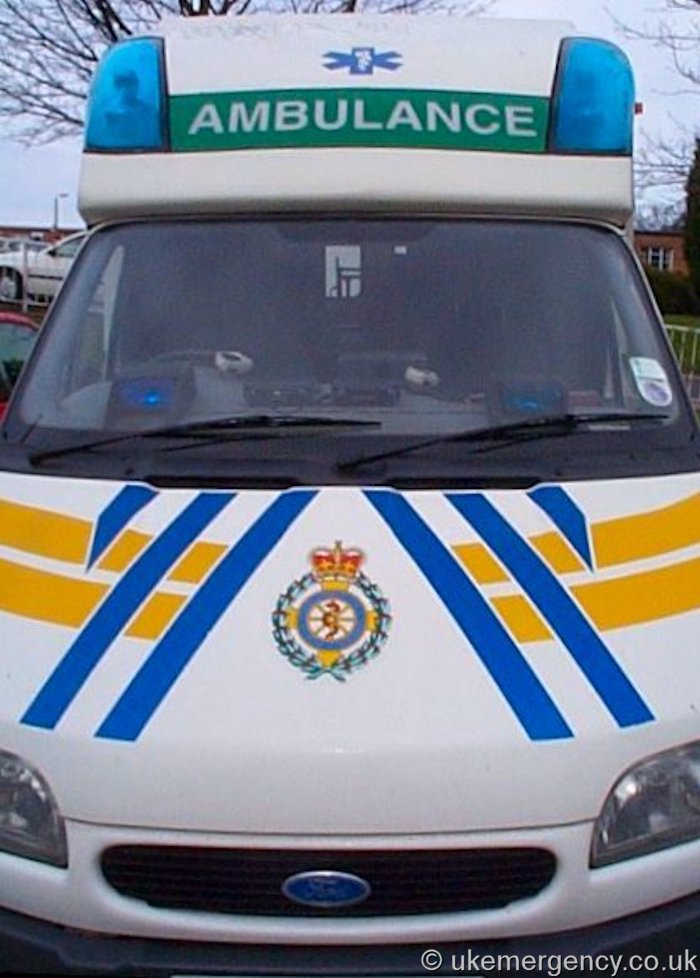
A closer look
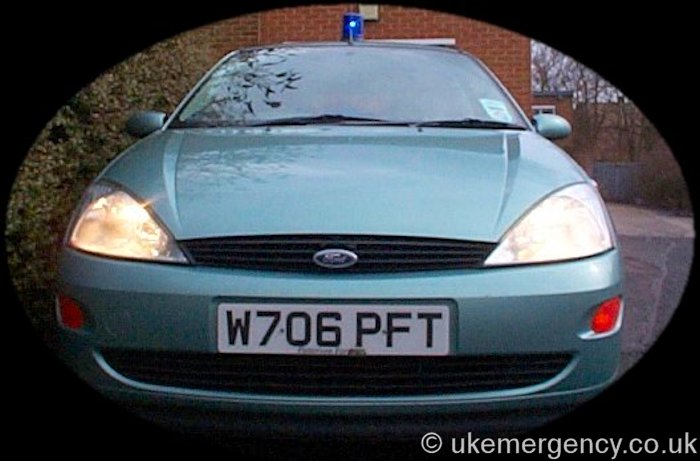
W706 PFT an ambulance service vehicle. It looks like any other metallic green Ford Focus, but place the rotating beacon on the roof, put the flashing light on the dashboard and turn the siren on and you have an emergency vehicle! The NEAS run many of these vehicles, all lease cars, which are replaced every three years. The dashboard-mounted and magnetic roof lights are used to avoid cutting holes in the car which the next owner may not appreciate. Hand-held radios are used to avoid aerial holes too.
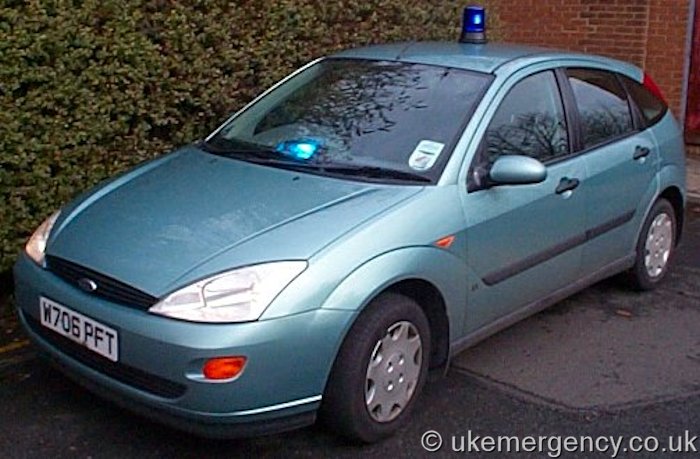
An alternative view
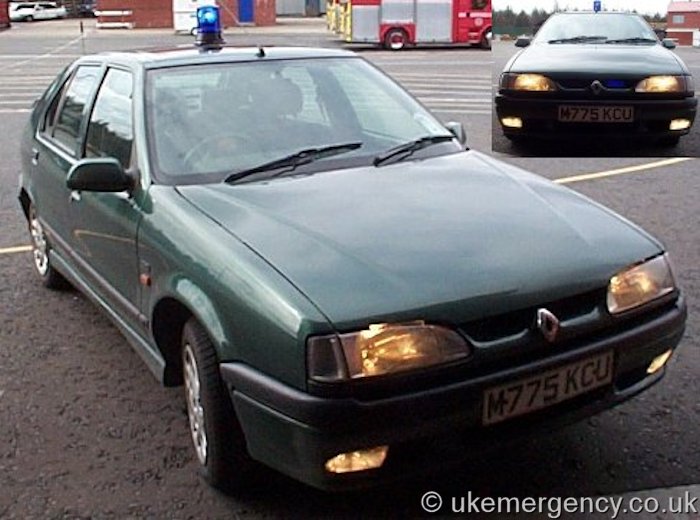
M775 KCU is a Renault 19, used by NEAS with its range of blue lights flashing. These vehicles were used prior to the arrival of the Focus above.
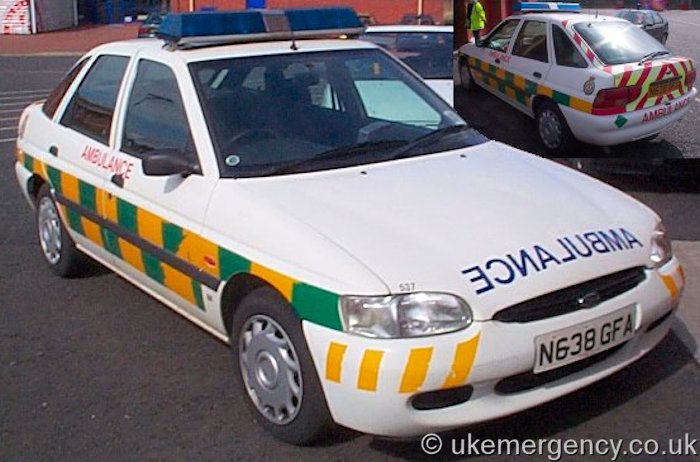
N638 GFA is Ford Escort dedicated to quick response calls.
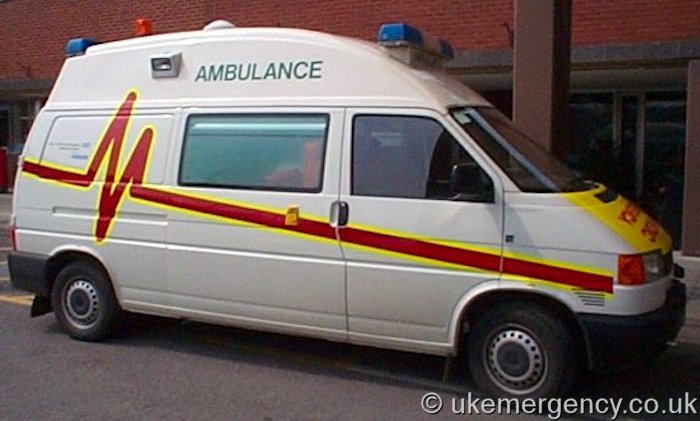
We start with a West Yorkshire Metropolitan Ambulance Service (WYMAS) VW Collet R231 DFC. West Yorks used to have the distinctive livery of a ‘heartbeat’ down the side of all their emergency vehicles. Notice the orange rotating beacon on the roof which means that it must be based near an airport. This will be used to comply with the Civil Aviation Authority rule that all vehicles on airport taxiways must show an orange flashing light.
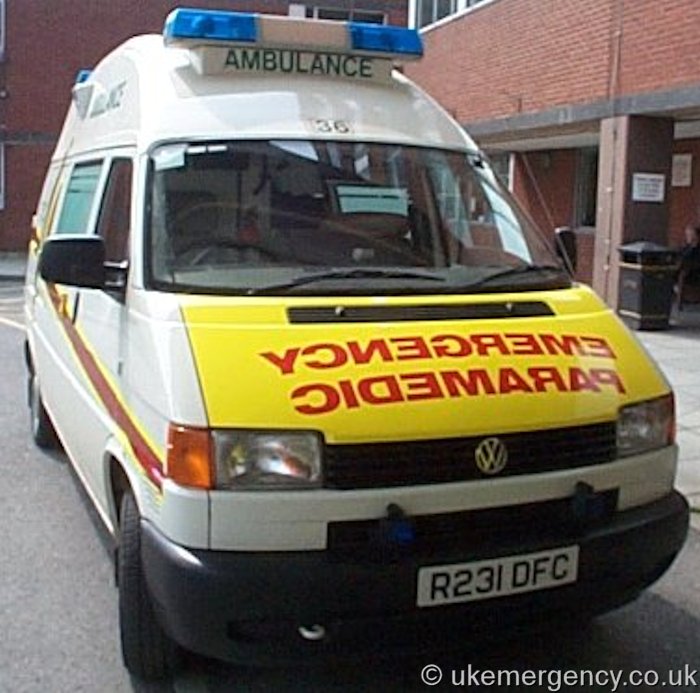
The front view
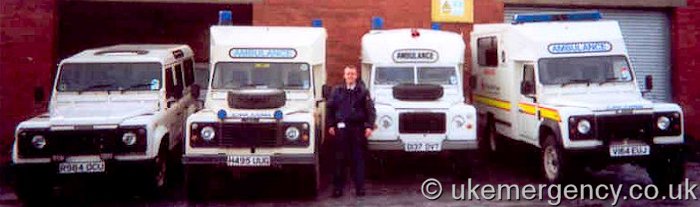
Here is a picture donated by a viewer of vehicles from the British Red Cross County Durham and Teesside branch.
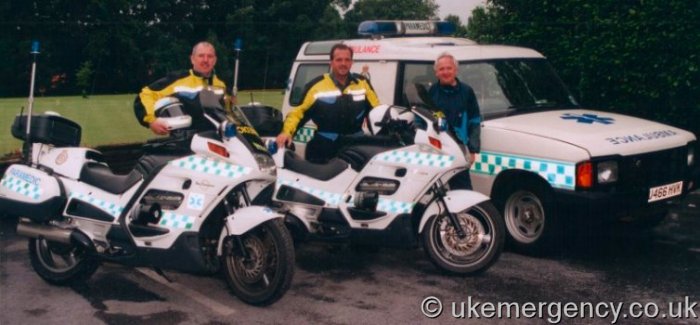
A photograph of two Northumbria Ambulance Service (now part of NEAS) Honda Pan-European emergency paramedic motorbikes and a Landrover Discovery J466 HVK.
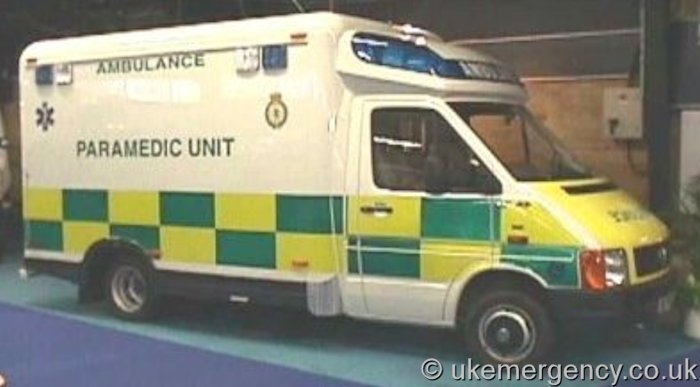
Here is a photo of an ambulance built by Crestline Coach Ltd. of Saskatoon, Canada.